
Image by Borin on Freepik
Environmental sustainability is often linked to major capital projects – things like solar panels, fancy new facades, and low-carbon building materials. And those investments do matter. But for most existing buildings, a lot of the environmental progress comes from something a lot less dramatic – how the heck you take care of the building from day to day.
It matters because buildings are still gobbling up a huge chunk of the world’s resources. The International Energy Agency says buildings account for about 30% of global energy demand, and UNEP says they were chomping 34% of global energy demand and 37% of energy- and process-related carbon dioxide emissions in 2022. So, day-to-day operations still shape a big part of a building’s environmental impact.
Cleaning and maintenance fit into that operational footprint. They affect water use, chemical exposure, indoor air quality, waste generation, and the lifespan of finishes and equipment. And if you’re not doing maintenance right, buildings end up using more resources than they need to and creating avoidable waste. On the flip side, if you get it right, organizations can cut resource use while also keeping the indoor spaces healthier and safer.
Why Routine Maintenance Matters Way More Than It Gets Credit For
Building sustainability is often talked about in terms of fancy HVAC upgrades, lighting retrofits, and renewable energy deals. And those are all important. But they’re not the whole story. Routine maintenance decisions also have an impact on environmental performance that adds up over time.
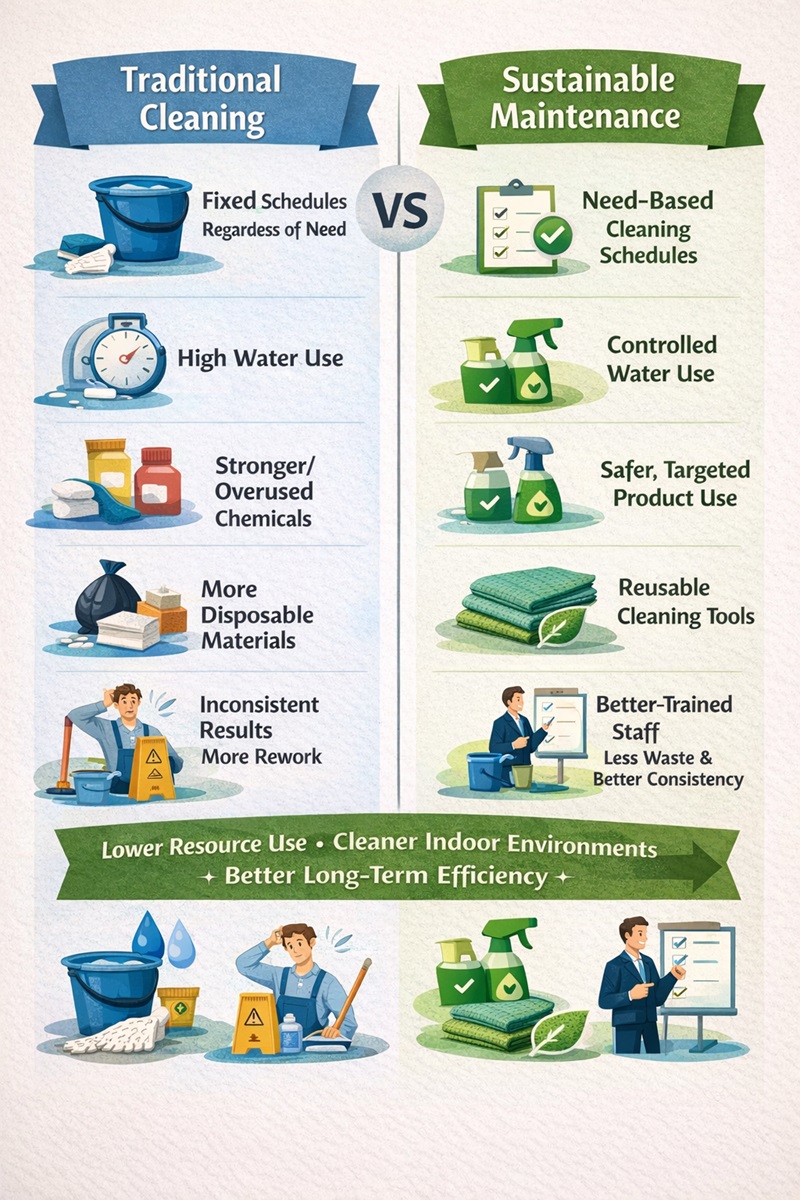
If a facility is just using way too many disposable supplies, applying way more cleaning chemistry than it needs to, running its machines like they’re from the Stone Age, or sticking to some rigid schedule no matter what’s going on with the building, it’s just wasting water, energy, labor, and materials. But if a facility is using smarter tools, safer products, trained staff, and actually looking at what’s going on with the building instead of just following a schedule – well, that can cut down on those losses without sacrificing cleanliness one bit.
That’s why green building frameworks have moved on from just focusing on design. LEED v5, the latest version of LEED, puts a lot of emphasis on operational performance, resilience, and human health. Its Operations and Maintenance pathway has a special Green Cleaning credit, which shows just how seriously everyday cleaning practices are taken in credible sustainability programs now.
The environmental footprint of conventional cleaning
Typically when we think of cleaning we think of it as a straightforward, maybe even a mundane task. But in reality, traditional cleaning practices can be pretty resource-intensive – especially in places like large offices and schools where surfaces get cleaned multiple times a day.
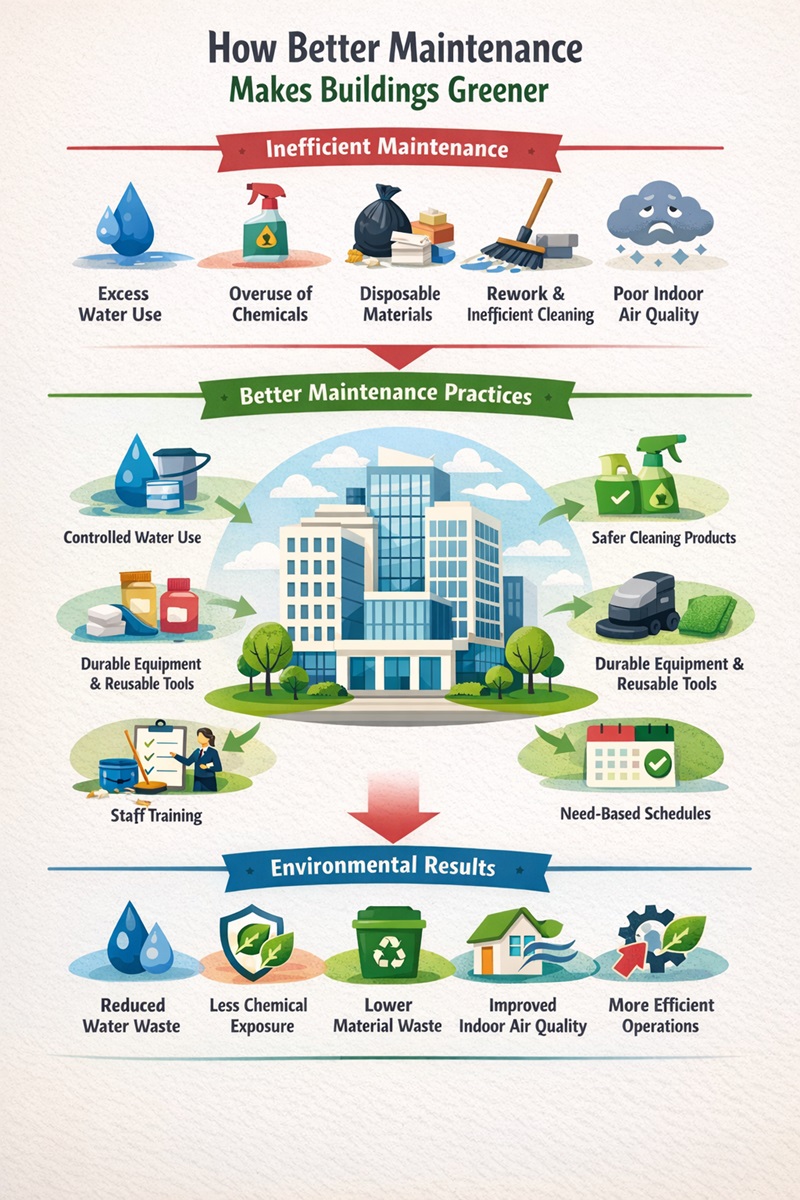
The areas where problems tend to arise are pretty clear-cut:
- Using too much water because we’re using old floor care methods that aren’t very efficient or because we’re cleaning the same areas over and over again.
- Slathering the wrong kind of chemicals or using products that are basically hazardous waste.
- Sending all sorts of disposable stuff like pads, wipes and packaging straight into the trash that adds to the waste problem.
- Poorly maintained equipment that just doesn’t work very well and ends up having to be redone.
- Rigid cleaning schedules that don’t take into account how many people are actually in the building or when they’re there.
One of the main places you see this is with floor care. Older methods require a lot more water to be used and you have to rinse a lot and make a lot of passes back and forth. Newer equipment can be a lot more precise with how much water it uses and can also suck up the dirty water it makes, instead of spreading grime all over.
The thing about that though is that the improved equipment isn’t the only thing that makes the difference. What really makes the difference is the combination of good equipment design, getting the right chemical mix, keeping the equipment in good working order, and training your staff.
Green cleaning has become a lot more concrete
Not that long ago, people used to throw around the term “green cleaning” pretty loosely. But now with stronger rules around what can be sold as green and what it actually means to be green, things have gotten a lot more serious.
The EPA’s safer choice program helps single out products that are safer for people and the environment and they also have a label for certain antimicrobial products like disinfectants and sanitizers. Having clear guidelines on what constitutes a greener product is a big help because it cuts through all the vague nonsense on packaging and gets down to the facts.
Green Seal’s GS-42 standard does something similar for cleaning services. It looks at not just the products you use, but also whether or not the people using them are properly trained, the methods you use to clean and how you buy supplies. That’s actually a lot more helpful for facility managers because green cleaning is about more than just what you stock in the supply closet. It’s about how you actually get the job done.
So for people in charge of buildings and facilities, the bottom line is that trust-worthy green maintenance is built on a few key things:
- Using products that have been certified as safe by a third party
- Using the right amount of chemicals and not using too much
- Getting away from throwing away disposable stuff and using equipment and tools that can be used and reused
- Training people in how to use the equipment and follow the right procedures, not just handing them equipment and saying good luck
- Keeping track of what’s working and what’s not and looking at how to do things better over time.
That’s a lot more specific and useful than just saying something is “eco-friendly”.
Getting the most out of smarter equipment to reduce waste
Technology has certainly made a big difference in maintenance operations – especially in big commercial spaces. We’ve got better floor-care gear, more advanced dilution control systems, battery powered tools and monitored dispensers to help facilities use water and cleaning solution a heck of a lot more precisely than they used to.
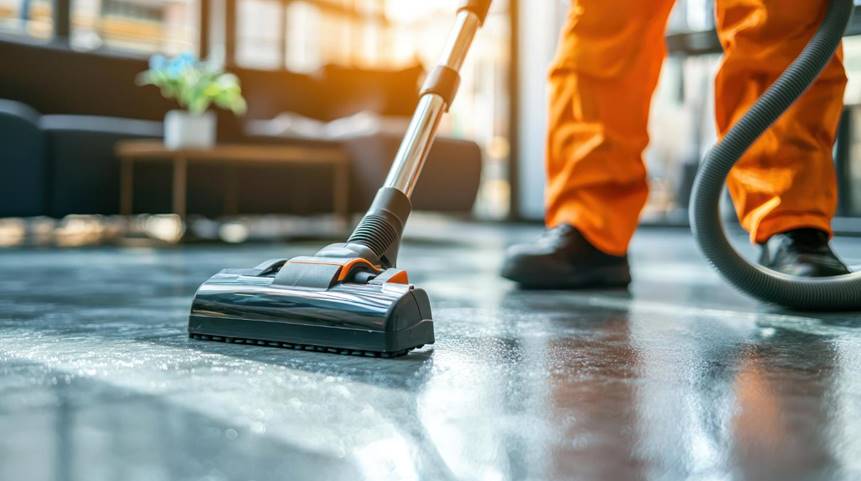
Floor scrubbers are a great example of this. When used right, they can make a real difference by applying cleaning solution in a controlled way, doing some of the hard work for you by mechanically scrubbing the surface and then sucking up the dirty water – all in one pass. Which can really cut down on unnecessary water use and reduce the need for rework compared to less controlled methods. And that’s where the real benefit comes in – a facility that gets cleaned more consistently, and with fewer resources wasted due to over application or over effort.
Facilities that train staff on how to operate a floor scrubber properly often find that these machines dramatically improve efficiency. By combining mechanical scrubbing with water recovery systems, floor scrubbers can clean large areas more thoroughly while using significantly less water and fewer chemicals than traditional techniques.
For large commercial spaces such as airports, hospitals, and manufacturing facilities, the environmental savings from these technologies can be considerable.
Now if people start making out that the equipment alone is the solution to all our problems, then that’s just not a fair reflection of how things work. You still need well trained staff, equipment that’s the right size for the space, regular maintenance on the batteries and parts, and cleaning schedules that actually make sense for the building conditions.
That sort of realistic thinking makes the article a lot more credible – rather than claiming that equipment alone is going to solve everything.
Chemical choices can affect both sustainability and how clean your air is inside
Cleaning products don’t just get rid of dirt and grime, they can also impact how clean the air in your building is.
According to the EPA, the levels of certain volatile organic compounds inside buildings can be up to 5 times higher than out in the open air – and sometimes even a lot more when you’re doing certain activities. Not every cleaner is a major VOC source, but the product you choose does matter, as does ventilation and how you use it. And in buildings that get cleaned a lot every day, poor choices can add to the indoor air pollution.
So when it comes to sustainability in maintenance, it’s not just about using less chemical. It’s about picking the right product, using the right amount, and doing it in a way that leaves the air in your building clean and healthy too. In a lot of situations you can get by with a milder product and a bit of mechanical elbow grease, but in places where it matters – like hospitals – you still need to use the right chemicals at the right strength to meet the infection control requirements.
That’s an important distinction to keep in mind. When we talk about sustainability, we shouldn’t be implying that using less chemical is always the best way, in every situation. Instead, the best approach is to use the least amount of chemical that still meets the cleanliness and safety standards for that space.
Water Conservation Is A Real Maintenance Headache
Water usage is often glossed over in building operations, even though cleaning programs are slurping down a ton of it over the course of a year. And that becomes especially pressing for places that are struggling just to keep the tap from running dry.
Top-notch maintenance programs don’t just rely on better gear. They also take a hard look at when and where cleaning is really needed. You don’t need to be blasting the bathrooms and break rooms with the same frequency and techniques as you do the high-traffic entryways. A more targeted approach will cut down on all the unnecessary cycles – and that means less water, chemicals and wear on the machines.
That’s exactly where maintenance is starting to get more data-driven. More buildings are using stuff like occupancy patterns, traffic data and sensor info to figure out how to best use their resources. It’s pretty simple – clean only when you really need to, not just because that’s what’s always been done.
Sustainable Maintenance Is Also Good For The Air We Breathe
Going green with maintenance isn’t just about cutting waste – it can actually make the indoor air a lot healthier too.
The EPA’s guidelines on indoor air quality say that keeping the air fresh and clean in office buildings depends on how well the building managers and the people who work there get along and work together. Cleaning is part of that – dust, dirt, moisture and some cleaning products can all be bad for you.
Here’s how a well-run maintenance program can make a difference:
- it keeps dust and dirt from building up in high-traffic areas
- it cuts down on the chemicals and fragrances that can make indoor air worse
- it helps to keep surfaces clean without over-wetting or overusing cleaning products
- it even helps prevent some pollutants and germs from getting around in the first place because of bad cleaning practices
We’re not saying that regular maintenance is going to cure whatever ails you. That’s just not something we can promise. But what’s more realistic is that better cleaning practices can make the indoor air a lot healthier by cutting down on all the yucky stuff that’s just hanging around.
Training Is Where The Rubber Meets The Road
You’ll notice that most articles about building maintenance tend to focus a lot on the products and the equipment and not so much on training and workforce stuff. But the truth is, good training is one of the most important parts of making a sustainable maintenance strategy actually work.
A facility can buy all the fancy cleaning products in the world and still waste them through bad dilution or technique. They can buy all the latest and greatest cleaning gear and still waste water by setting it up wrong or by doing unnecessary passes. And they can even adopt a green cleaning policy and still fail if the supervisors aren’t keeping track or the staff don’t understand why they’re doing things a certain way.
That’s why organizations like Green Seal make sure that training, communication and documentation are all at the core of a good cleaning program, not just nice-to-haves.
Training should cover all the important stuff, like:
- picking the right cleaning products for the job at hand
- how to dilute and use them right
- how to run and maintain the cleaning gear
- how to handle those reusable microfiber cloths
- what to do in case of a spill or other emergency
- and how to sort and reduce waste
The latest shift: Maintenance is becoming more measurable
One of the biggest things that’s happened recently is that building operations are getting a lot easier to keep track of. And that matters a lot because when you can prove that your sustainability claims are true then they carry a lot more weight
These days its getting easier and easier for Facilities to keep tabs on things like:
- water use in different areas of the building
- how much cleaning chemicals they’re using up
- how often things need to be redone because they were done wrong the first time
- how long machinery is up and running versus when its broken
- where in the building people are actually hanging out – so you know when to clean or when to leave things alone
- how the quality of the air inside is in certain areas of the building
The EPA has also been talking about air-sensor technology for indoor spaces & lets be clear – this is a good thing… but they also remind us to take any data we get from these sensors & not just use it willy nilly. The bigger point is that maintenance is no longer just something you deal with in the background, its now part of the system that keeps an eye on how the building is performing.
That change just makes it even more clear that the article’s main point is right on: greener buildings dont just get that way because you put a lot of fancy features in when you were building them, they get that way because people in operations, janitorial staff & facilities managers are making good choices every day.
Maintenance needs to be part of the sustainability conversation
Green buildings dont just come from fancy architecture or expensive renovations. They also come from the everyday choices that operations teams, janitorial staff & facilities managers make.
And more and more mainstream building standards are starting to catch on to this. LEED v5 for example is really emphasizing the importance of how you run the building once its up & running – not just how it was built. The EPA’s got safer product guidance & Green Seal has service standards now that make it a lot clearer how you go about choosing products that are good for the environment & how you go about cleaning buildings in a way that’s good for the environment.
So for most organizations the next step is pretty clear: start with procurement. Look at what kind of products you’re using & see if you can do better. Get a handle on dilution control. Replace some of the older tools with newer ones if it makes sense. Train your staff to do things the right way. Make sure you’re cleaning only the areas that need it & not wasting water or chemicals just for the sake of it. And then start measuring how you’re doing & see if you can keep getting better over time.
It’s not glamorous work or anything – but in a lot of cases thats where the real progress is made.