



Raspberries are a pretty common fruit in American homes. They’re sweet, they’re good for you, and you can find them snuck into smoothies, cereal, and all sorts of desserts. But when you’re munching on a snack and your dog starts eyeing those berries – it’s really no surprise that the question pops up: can dogs safely eat raspberries?
The bottom line is: yes, dogs can eat raspberries in small doses. But, like most human foods, they come with a mix of good and bad for our furry friends. If you’re going to give your dog raspberries, it’s worth knowing how much they can safely eat, and what kind of health effects you might both experience.
This is a guide I put together with the help of some local vets. It’s what every US dog owner should know before giving their pup a raspberry snack.
The Quick Answer: Can Dogs Have Raspberries?
Yes – in moderation of course: raspberries can be good for your dog. They contain all sorts of useful stuff like fiber, antioxidants, and some great vitamins that can support their immune and digestive systems. But they also have a lot of sugar, and that, plus some naturally occurring xylitol (a thing that comes in some kinds of berries) can cause stomach upset if your pup eats too much. So in general, it’s best to only give raspberries as a special treat, and not as a regular part of their diet.
Are Raspberries Really Safe for Dogs?
When it comes to vets, they generally agree that as long as you keep an eye on how much your dog eats, raspberries are probably fine for them. Since dogs are basically natural omnivores, they can handle a bit of fruit and veg as a supplement to their meat – and it can even help mix things up a bit and add some extra nutrients to their diet.
But remember that dogs aren’t us: they have different nutritional needs, and their system is built to digest protein-heavy foods, not a bunch of sugars & fiber. Which is why controlling portion sizes is super important when it comes to feeding your dog raspberries
Nutritional Snapshot of Raspberries
Raspberries pack a punch when it comes to the nutrients that can benefit your dog. So lets take a look at what they have to offer:
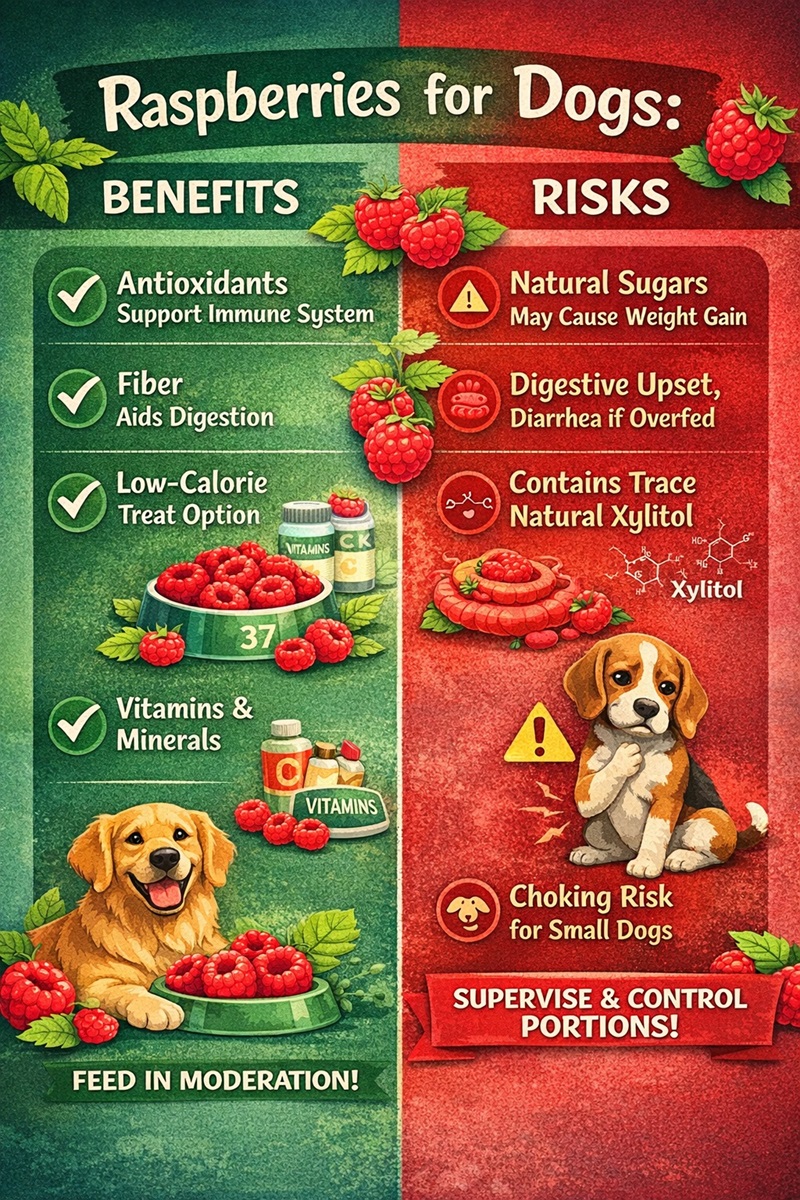
- They’re a good source of dietary fibre which can really help keep your dog’s digestive system running smoothly
- They’re also a good source of Vitamin C, which is great for keeping your dog’s immune system in top shape
- They contain a bit of Vitamin K, which will help keep your dog’s blood clotting properly and also support healthy bones
- And let’s not forget about the antioxidants – like polyphenols and flavonoids – that can help protect your dog’s cells from damage
- They also contain manganese, an essential mineral that’s great for your dog’s metabolism and bone development
Compared to a lot of the commercial dog treats on the market raspberries are pretty low in calories, which makes them a great option if your dog needs to lose a little bit of weight.
Health Benefits of Raspberries for Dogs
When fed in moderation raspberries can really do some good for your dog. They’re definitely worth adding to the mix.
Antioxidants That Support Immune Function
Raspberries are like a shield for your dog’s cells – they contain loads of antioxidants that will help protect them from oxidative stress. And as we all know oxidative stress can lead to all sorts of health problems in dogs, like chronic inflammation – so it’s great to have a little bit of extra protection. And it’s especially good news for older dogs, who are more likely to need a bit of extra support.
Fiber That Supports Digestive Health
The fibre in raspberries is like a magic bullet for your dog’s digestive system – it can really help get things moving in the right direction. And it’s especially good news for dogs who are prone to mild constipation. Just be sure not to overdo it, or your dog might end up with the opposite problem – diarrhoea.
Vitamins and Minerals That Support Overall Wellness
Vitamin C is one of the big winners when it comes to raspberries. It’s a brilliant immune system booster, and it can also help with tissue repair. And let’s not forget about vitamin K – it’s great for blood clotting and bone metabolism, while manganese is essential for your dog’s metabolic processes and bone strength.
Low-Calorie Treat Option
We all know how tempting it can be to give our dogs treats, but the problem is a lot of them are just too high in calories. But raspberries are different – they’re a great low-calorie option that will satisfy your dog’s sweet tooth without blowing their diet.
Risks of Feeding Raspberries to Dogs
While raspberries are pretty safe in moderation there are a few things to watch out for.
Natural Sugar Content
Raspberries contain natural sugars which can contribute to weight gain if your dog eats too many of them. And that’s especially a problem for dogs who are overweight or have diabetes.
Xylitol – A Sugar That’s Toxic to Dogs
Raspberries do contain a tiny bit of xylitol, a sugar alcohol that’s highly toxic to dogs. But don’t worry – you’d have to eat a massive amount of raspberries to get a toxic dose. Still, it’s always better to err on the side of caution and only give your dog small amounts.
Digestive Upset
If you overfeed your dog raspberries they can get a bit of a tummy upset – and that can mean loose stool, gas, bloating, stomach discomfort and even vomiting. It’s especially a problem for dogs with sensitive tummies or food intolerances.
Choking and Seed Concerns
Raspberry seeds are generally okay to eat, but they can still present a bit of a choking hazard if your dog tries to swallow them whole. And that’s especially a problem for very small dogs or puppies. To keep things safe just mash or chop the raspberries before serving them to your dog.
How Many Raspberries Can Dogs Eat?
Safe serving sizes depend largely on body weight. Veterinarians often recommend that treats — including fruit — should make up no more than 10 percent of a dog’s daily calorie intake.
Safe Raspberry Portion Guide
| Dog Size | Weight Range | Safe Serving |
| Extra Small | Under 10 lbs | 1–2 raspberries |
| Small | 10–25 lbs | 2–4 raspberries |
| Medium | 25–50 lbs | 5–6 raspberries |
| Large | 50–90 lbs | Small handful |
| Giant | Over 90 lbs | Moderate handful |
Dogs should not eat raspberries daily. Offering them once or twice weekly is generally considered safe for most healthy dogs.

Can Puppies Have Raspberries?
Puppies can be given raspberries, however owners need to keep a close eye on them. Young dogs have developing digestive systems that can be a bit more delicate and might not take to new foods.
When you first introduce raspberries to your puppy:
- Start with just one small berry at a time to see how they react
- Look out for any signs of their tummy being upset
- Mash or chop the berries to stop them from choking
- Wait 24 hours before trying more – you can always try a little bit more if they seem okay
- Keep an eye on them, if they get a bit sick, bloated, or just seem off – stop giving them raspberries straight away and take them to the vet
The Best Ways to Safely Feed Raspberries to Your Dog
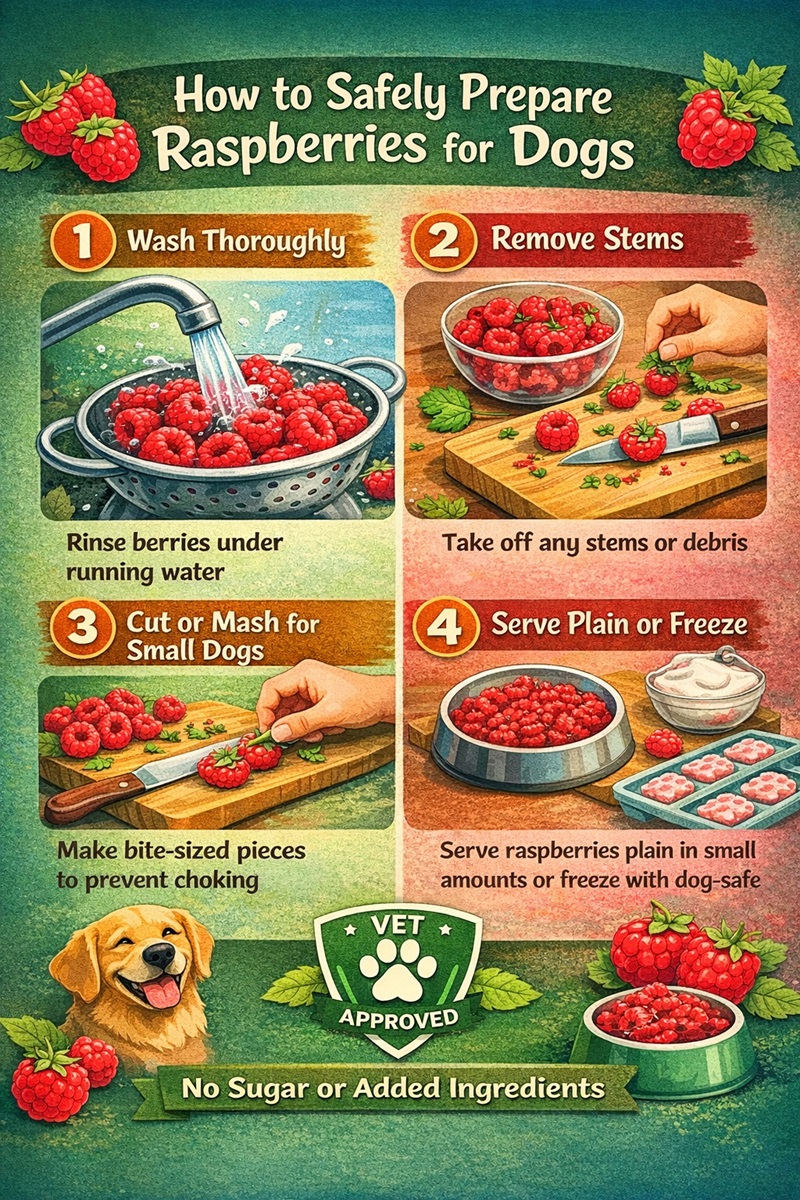
Preparing the raspberries properly can really help prevent choking hazards and make sure they are clean
Fresh Raspberry Preparation
- Give them a good rinse in the sink with some running water
- Pull off any stems or other debris
- Chop or blend them if your dog is a small breed – or has small teeth and a big appetite
- Just serve them plain, no sugars or anything else
Frozen Raspberry Treats
Frozen raspberries can be a nice, cooling snack for dogs. Plus they provide a bit of mental stimulation and can be a fun way to keep your dog occupied for a bit
Just be careful – you’ll want to either give them a bit of time to thaw out a bit or offer them blended up so small dogs don’t choke
Homemade Raspberry Dog Treat Ideas
If you want to try making some homemade treats for your dog:
- Mix some mashed raspberries up with some plain, unsweetened yoghurt and pop it in an ice tray to freeze
- Put a bit of raspberry puree on top of their dinner as a change of pace
- Try mixing raspberries with other fruits like blueberries – that dogs are safe to eat – for a nice tasty treat
Raspberry Products to Avoid Giving Your Dog
A lot of raspberry-flavored foods are made for us humans, and they contain ingredients that are really bad news for dogs
Make sure your dog doesn’t get:
- Raspberry jam or jelly – it’s filled with sugar
- Raspberry syrup or dessert toppings – again, all that sugar is bad news
- Baked goods with artificial sweeteners – they can make your dog very poorly
- Chocolate raspberry desserts – chocolate is really bad for dogs
- Any kind of processed raspberry snacks that are sugar coated or contain nasty additives
When Your Dog Eats Too Many Raspberries
If your dog gets over-excited about raspberries and eats too many, you might start to see some problems
Mild Symptoms
- They might just get a bit gassy
- They might have some soft stool – or get a bit runny
- They might have a bit of a mild tummy upset
Symptoms that Require a Trip to the Vets
- If they keep on vomiting
- If they get really bad diarrhea
- If they lose their appetite
- If they seem super lethargic – all of a sudden
If any of these symptoms stick around for more than 24 hours, it’s a good idea to take them to see a vet.
When Dogs Should Steer Clear of Raspberries
If your dog has got any health problems, you need to be careful with the foods you give them. Some dogs just shouldn’t have raspberries at all
Dogs that probably shouldn’t have raspberries include:
- Dogs with diabetes
- Dogs with long standing stomach problems
- Dogs who are allergic to fruits
- Dogs that are on special diets – as laid out by a vet
If your dog has any of these conditions, you always need to check with your vet before trying out any new foods.
Are Raspberries Better Than Other Berries for Dogs?
Raspberries are safe but not necessarily superior to other berries. Several berries offer unique benefits.
| Berry | Safety Level | Sugar Content | Primary Benefit |
| Raspberries | Safe in moderation | Moderate | Fiber and antioxidants |
| Blueberries | Very safe | Lower | Cognitive and immune support |
| Strawberries | Safe | Moderate | Vitamin C and hydration |
| Blackberries | Safe | Moderate | Digestive and antioxidant support |
Blueberries are often considered the safest berry due to their lower sugar content and high antioxidant concentration.
Vet-Approved Tips for Feeding Fruits to Dogs
If you’re one of the many pet owners looking to add a bit of fruit to your dog’s diet, here are some key takeaways from veterinary nutrition experts to get you started:
- Introduce new fruits 1 at a time, so you can monitor how your dog reacts
- Pay attention to how much you’re giving them – you don’t want to go overboard
- Keep an eye on the poop and how your dog’s behaving – if you notice anything out of the ordinary, stop and talk to your vet
- Fruits should be treats, not meals – give them in moderation
- Steer clear of canned or sugary fruits – they’re just not that great for you doggies
Following these guidelines will help you avoid some of the common pitfalls of adding fruit to your dog’s diet – like digestive upset and unbalanced nutrition.
Frequently Asked Questions – Because We Know You’ve Got Them!
Can I give my dog raspberries every day?
Honestly, dogs shouldn’t eat raspberries every day. If you’re gonna do it, do it once or twice a week, so you can gauge how well they’re handling it.
Can I feed my dog frozen raspberries?
The good news is yeah, frozen raspberries are fine in moderation – just be sure to break them down a bit so smaller dogs don’t choke on them.
Are raspberry seeds safe for my dog?
Raspberry seeds are generally okay, even for small dogs. But if they’re still young, it’s a good idea to mash up the berries just in case.
Can I give my dog raspberry juice?
Don’t – unless you want to risk giving your dog too much sugar or artificial junk. Your vet will thank you.
What fruits are safe for my dog to eat?
Some of the safest fruits include blueberries, apples (seedless, of course), bananas, and watermelon (seedless too). Just remember, moderation is key.
Are Raspberries a no-go for my diabetic dog?
Truth is, raspberries do contain natural sugars, so it’s best to either avoid them or limit them to an absolute minimum – unless, of course, your vet says it’s okay.
When Should I Call the Vet?
If your dog gets any of the following symptoms, call the vet ASAP – swelling, itching, persistent vomiting or diarrhea, sudden lethargy or loss of appetite, or if they accidentally eat some processed raspberry food.
The Bottom Line: Can I Really Feed My Dog Raspberries?
Raspberries can be a great, low-calorie treat for dogs when you do it right. They’re packed with fiber, vitamins, and antioxidants that’ll do your dog some good. Just remember to keep it in check – they do contain some natural sugar and a tiny bit of xylitol. For most healthy dogs, a little raspberry every now and again is just fine. Just watch your dog closely and talk to your vet if you ever have any concerns.