

With UK businesses facing volatile energy prices, ever-tightening sustainability targets and increasing regulatory pressure, energy wastage is no longer just a technical issue and it’s one that deserves C-suite level investment.
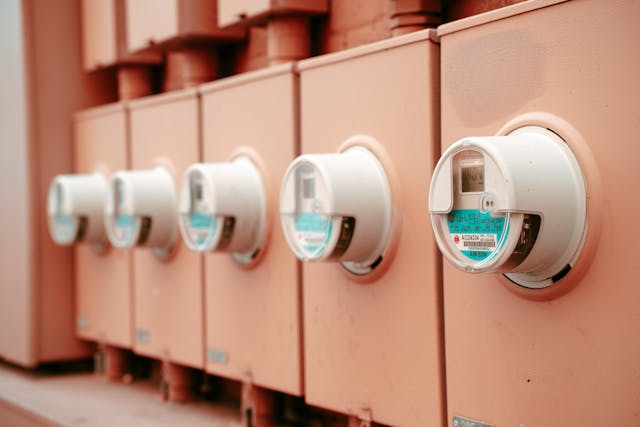
Thankfully, making energy sustainability decisions has been made infinitely easier in recent years thanks to the introduction of smart metres that offer real-time visibility of consumption across electricity, gas and even water.
This turns previously opaque overheads into actionable data. Rather than relying on manual reads and spreadsheet-driven assumptions, modern smart metering and monitoring platforms give a continuous, granular picture of what’s being used, where and when.
Real-time insights drive waste reduction
The most immediate benefit of smart metering is transparency. Interval data (often down to 30-minute or finer granularity) exposes patterns that periodic bills simply can’t show.
With this level of insight, facilities and energy managers can:
- Benchmark similar sites or departments
- Challenge abnormal baseloads and out-of-hours usage
- Quantify the impact of behavioural or process changes
By providing real-time usage data directly to commercial energy suppliers, smart meters enable businesses to receive more accurate bills, identify inefficiencies, and work with their supplier to implement targeted energy-saving strategies. When that data is also fed into internal dashboards and KPIs, it becomes the backbone of continuous improvement in energy performance.
Accurate billing removes guesswork
For many organisations, “bill shock” and inconsistent forecasting stem from estimated reads. Smart meters automatically transmit accurate meter data to suppliers, significantly reducing the use of estimates and bringing invoice values much closer to actual consumption.
This accuracy supports:
- More reliable budgeting and accruals
- Easier validation of supplier invoices
- Clearer baselines for measuring the impact of energy projects
With the billing noise removed, finance and sustainability teams can focus on the real objective: reducing the kilowatt-hours, not arguing about them.
Supporting energy planning and operational decisions
Smart metering also underpins more strategic decisions about when and how energy is used. Detailed profiles allow businesses to:
- Reschedule high-intensity processes into off-peak tariff windows
- Align BMS and thermostat set points with actual occupancy patterns
- Right-size equipment upgrades and retrofits based on real load data
Ofgem’s most recent market report notes that around 61% of business meters are now smart or advanced, with roughly 90% operating in smart mode. For organisations that can shift load, smart metering data is critical to unlocking these commercial benefits.
Aligning with UK policy and sustainability goals
Smart metering is also firmly embedded in UK policy. The government’s 2025 consultation on the non-domestic smart meter rollout post-2025 positions smart meters as an essential enabler of its overarching “Clean Power by 2030” mission and proposes measures to further increase uptake across smaller non-domestic sites.
For businesses, this means smart meter data is increasingly the evidence base for:
- Carbon reduction plans and ESG disclosures
- Building decarbonisation roadmaps and investment cases
- Demonstrating compliance with emerging energy and reporting standards
In practice, smart metering is no longer a “nice to have” gadget but a core data source for reducing energy waste, improving operational efficiency and aligning commercial performance with sustainable policy expectations.