


Quick Answer: Are Spider Plants Toxic to Cats?
No. The ASPCA says spider plants are safe for cats and dogs.
But your cat might get an upset stomach if they eat a lot. This is more common in kittens. They might vomit or have diarrhea.
Here’s what cat owners need to know to keep plants and pets safe.
What Vets and the ASPCA Say
The ASPCA keeps a list of plants that are toxic to pets. Spider plants are on the safe list. They don’t have poison in them.
The Pet Poison Helpline agrees. So does the National Capital Poison Center. Vets say spider plants are safe for homes with cats.
So why do some cats get sick after eating them?
There’s a big difference between “toxic” and “causes an upset stomach.” Spider plants aren’t poisonous. But they can bother your cat’s stomach if eaten in large amounts. It’s like eating too much grass.
Why Are Cats Obsessed With Spider Plants?
If spider plants are safe, why do cats love them so much?
The Movement Factor
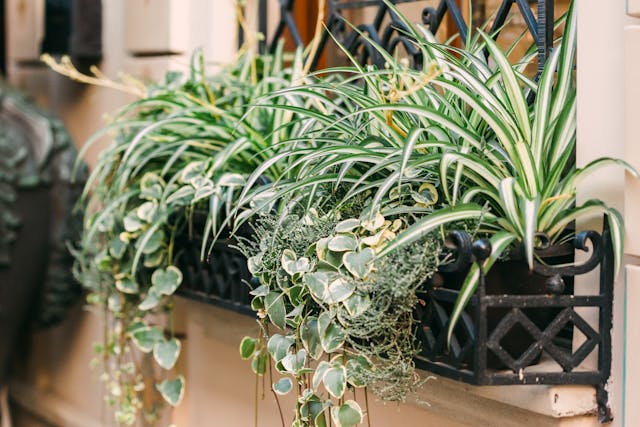
Spider plants have long leaves that hang down and move in the air. To a cat, this looks like prey. It makes them want to bat at it, chase it, and bite it.
The Hallucinogenic Theory
Here’s the interesting part. Some experts think spider plants have chemicals similar to catnip. These chemicals might make cats feel happy or excited. This could explain why some cats keep coming back to chew them.
This isn’t proven yet. But many cat owners say their cats act playful or “drunk” after chewing spider plant leaves. The behavior looks a lot like a catnip reaction.
The Texture Appeal
Spider plant leaves feel like grass. Many cats eat grass by instinct. Cats can’t digest plants well, but they eat grass to help with hairballs or to calm their stomach.
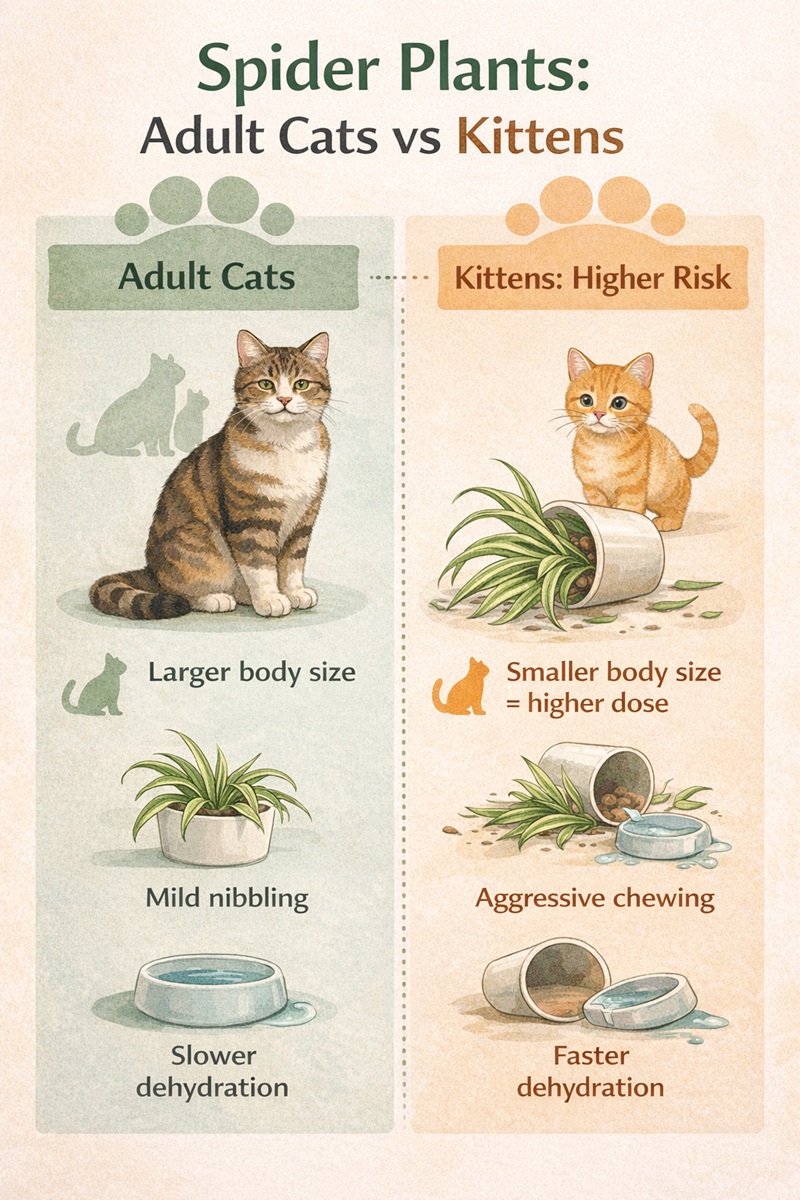
Kittens are at higher risk because they’re teething. They’re also curious and haven’t learned what not to chew.
What Happens If Your Cat Eats a Spider Plant?
Most cats who nibble spider plants have no problems at all. When symptoms happen, they’re usually mild.
Common Symptoms (Usually Mild)
- Drooling
- Gagging
- Vomiting (you might see plant pieces)
- Diarrhea
- Less appetite for 12-24 hours
- Mild tiredness
- Extra energy or playfulness (from the possible high)
These symptoms usually show up within 2-6 hours. They go away on their own within 24 hours.
Why Some Cats React and Others Don’t
Two cats can eat the same plant and react differently. This depends on:
- How much they ate: A small bite vs. several leaves
- How they ate it: Chewed and spit out vs. swallowed
- Stomach sensitivity: Some cats have weaker stomachs
- How often: First time vs. regular chewing
- Empty stomach: Eating plants on an empty stomach causes more irritation
- Age: Kittens get upset stomachs easier than adult cats
When to Call Your Vet
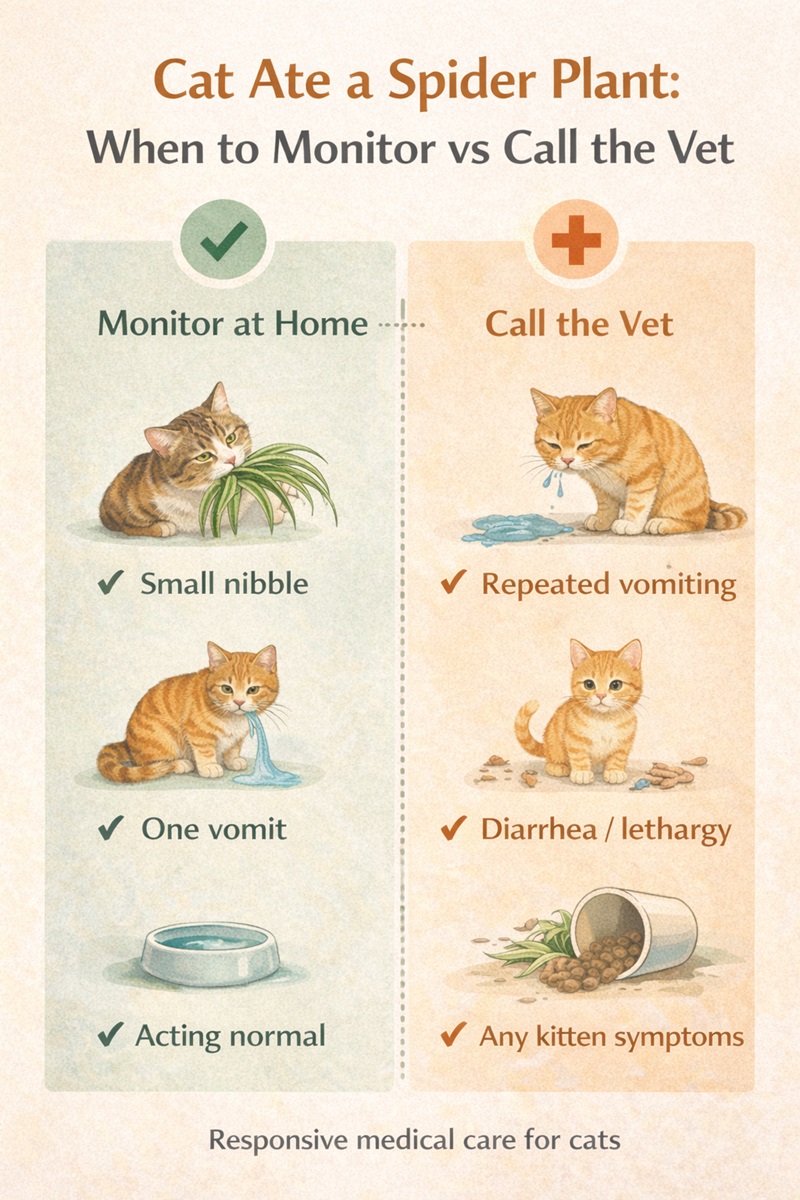
Most cases get better at home. But some situations need vet care.
Watch at Home If:
- Your adult cat took a few small bites
- They vomited once then acted normal
- Your cat is alert and drinking water
- They’re still eating
- There’s no blood in vomit or poop
- Symptoms go away within 24 hours
Call Your Vet Right Away If:
- Vomiting over and over (more than 2-3 times in 24 hours)
- Diarrhea that won’t stop (lasting more than 24 hours)
- Won’t drink water or seems dehydrated (dry gums, sunken eyes)
- Very tired, weak, or collapsed
- Blood in vomit or poop
- Stomach pain (hunched over, cries when touched, won’t move)
- Any symptoms in kittens under 6 months
- Symptoms lasting more than 24 hours
Important: If you’re not sure the plant is a spider plant, be extra careful. Some toxic plants look similar.
What to Do Right Away If Your Cat Eats a Spider Plant
Step-by-Step:
- Move the plant away right now
- Clear plant pieces from your cat’s mouth if you can do it safely (watch out for bites)
- Give fresh water to help flush the plant out
- Watch closely for the next 24 hours
Don’t:
- Make your cat vomit unless a vet tells you to
- Give milk, oils, or human medicine
- Panic—spider plants aren’t poisonous
Info Your Vet Will Need:
- How much was eaten (a few bites, several leaves, the whole plant)
- When it happened (time and date)
- Your cat’s age and weight
- Current symptoms and when they started
- What products were on the plant (fertilizer, bug spray, leaf shine)
The Hidden Danger: Often It’s NOT the Plant
Many times when cats get sick after “eating a spider plant,” the real problem isn’t the plant. It’s what’s in or on the plant.
Common Toxic Add-Ons:
Fertilizers: Both solid and liquid fertilizers can be toxic. Some have bug killers in them.
Bug sprays: Treatments that protect the whole plant from bugs can also hurt cats.
Fungus sprays: Used to treat mold can cause poisoning if eaten.
Leaf shine products: Often have petroleum or oils that are toxic to cats.
Soil add-ins: Bone meal and blood meal smell good to cats but can cause bad stomach upset.
Decorations: Rocks, marbles, and moss can choke cats or block their intestines.
Key Safety Rule:
If you have cats, assume anything added to your plant pot might be more dangerous than the plant. Use pet-safe products only. Or don’t use any treatments on plants cats can reach.
How to Keep Spider Plants and Cats Together
Some cats ignore spider plants. Others treat them like food. If your cat chews plants, you need real barriers—not sprays.
What Works:
Physical barriers:
- Closed rooms with locked doors
- Plant cabinets or glass cases
- Wall planters that are truly out of reach (test it by watching your cat)
- Taking the plant out of your home
What Usually Fails:
Hanging baskets: Only works if you have very high ceilings and no nearby furniture. Most cats can jump 5-6 feet up. They’ll use furniture to get higher.
Bitter sprays: Some cats don’t mind the taste. You have to spray often.
Citrus peels: Only works for a short time. Some cats ignore them.
Training: Some cats can be trained. Most will chew when you’re not looking.
The Reality:
If your cat showed interest in spider plants even once, they’ll keep trying. Cats are patient and smart when they want something.
Safe Plant Options for Cats Who Love to Chew
If your cat wants to chew plants, give them safe ones instead.
Best Cat-Friendly Plants:
Cat grass (wheatgrass, oat grass, or barley grass):
- Made just for cats to eat
- Helps with hairballs
- Safe in small amounts
- Easy to grow inside
Catnip:
- Makes about 70% of cats feel happy
- Safe to eat and chew
- Can be grown fresh or bought dried
Catmint:
- Like catnip but milder
- Safe for cats
- Pretty flowers for your home
Spider plant look-alikes that ARE safe:
- Boston fern (totally safe)
- Bamboo palm (safe and looks similar)
Important Note:
Even safe plants should be eaten in small amounts. Too much fiber from any plant can cause vomiting or diarrhea. Think of cat grass as a treat, not a meal.
How to Know It’s Really a Spider Plant
People often mix up plants. Some look-alike plants are toxic to cats.
Real Spider Plant Signs:
- Long, narrow leaves that arch (6-16 inches long, ½-1 inch wide)
- Green or green-and-white stripes along the leaf
- Grows in clumps from the center
- Makes long stems with baby plants on them
- Small white flowers sometimes
- Thick roots (you can see them if the pot is crowded)
Toxic Plants That Look Similar:
Dracaena plants (Corn plant, Dragon tree):
- Look like spider plants with striped leaves
- Very toxic to cats (causes vomiting, drooling, weak pupils)
Fire Flash plant:
- Related to spider plants but has orange stems
- Safety unknown—be careful
Lucky bamboo:
- Sometimes confused with spider plants
- Toxic to cats
Not sure? Take a clear photo of your plant. Show your vet or use a plant ID app. Make sure it’s safe before you assume low risk.
Spider Plants vs. Really Toxic Plants
Context matters. Here’s how spider plants compare to dangerous plants.
| Plant | Toxic Level | What Happens if Eaten |
| Spider Plant | Safe (per ASPCA) | Mild upset stomach possible |
| Lilies | Very toxic | Kidney failure, death in 24-72 hours |
| Pothos | Toxic | Mouth pain, drooling, vomiting |
| Sago Palm | Very toxic | Liver failure, seizures, death |
| Dieffenbachia | Toxic | Bad mouth pain, swelling, drooling |
| Aloe Vera | Toxic | Vomiting, diarrhea, shaking |
The key difference: Spider plants don’t have the chemicals that cause real poisoning. The worst that happens is a temporary upset stomach. This is nothing like the organ failure from truly toxic plants.
Common Questions
Can kittens eat spider plants?
Spider plants are safe for kittens just like adult cats. But kittens have smaller bodies and weaker digestive systems. This makes them throw up and have diarrhea easier. Kittens also chew plants more because they’re teething and curious. Keep spider plants away from kittens to be safe.
Do spider plants get cats high?
Some research says spider plants might have chemicals that work like catnip. While not proven for sure, many cat owners report their cats acting playful or “drunk” after chewing spider plants. This effect seems harmless and doesn’t last long.
Are baby spider plants safe for cats?
Yes. The baby plants are just as safe as the big plant. They have the same chemicals. The ASPCA says they’re safe. The same advice applies—they might cause mild stomach upset if eaten in large amounts.
Can I spray deterrents on spider plants?
You can, but it works differently for each cat. Bitter sprays and citrus sprays work for some cats but not others. You also have to spray often. Physical barriers work better and are more reliable.
Should I let my cat eat spider plants for fiber?
No. Spider plants won’t poison your cat, but there’s no health benefit either. If your cat wants fiber or grass, give them cat grass made for that purpose. Cat grass is safer and cleaner. It’s made for cats to digest.
The Bottom Line: Are Spider Plants Safe for Cats?
Yes—spider plants are officially safe according to the ASPCA and major vet organizations.
But, “safe” doesn’t mean “can’t cause any problems.” Spider plants can still cause:
- Temporary upset stomach (vomiting, diarrhea)
- Mild stomach irritation
- Possible mild high effects
The safest approach:
- If your cat ignores your spider plants, you can keep them
- If your cat tries to chew them, move the plants away
- For cats who chew a lot or kitten homes, remove spider plants and offer cat grass instead
- Always use pet-safe products on any plants in your home
Remember: If your cat keeps eating a houseplant, that plant isn’t safe for your home—even if it’s technically non-toxic. Your cat’s behavior matters as much as the plant’s safety rating.
Help Resources
- ASPCA Animal Poison Control: (888) 426-4435 (fee may apply)
- Pet Poison Helpline: (855) 764-7661 (fee applies)
- ASPCA Plant Database: aspca.org/pet-care/animal-poison-control/toxic-and-non-toxic-plants
When to get emergency care: If your cat has bad symptoms, can’t breathe, has seizures, collapses, or you’re not sure what plant they ate, call your vet or emergency animal hospital right away.
This article has been reviewed for vet accuracy. It follows guidance from the ASPCA Animal Poison Control Center and Pet Poison Helpline. Spider plants are safe, but each cat may react differently. Always talk to your vet about specific concerns for your pet.