

Cutting ceramic, porcelain, marble, and stone requires more than a steady hand—it requires the right machine. While manual cutters work for basic straight lines, an electric tile cutter delivers the precision, speed, and consistency needed for modern tilework, especially with today’s large-format and extra-hard tiles.
A high-quality electric tile cutter doesn’t just make your job easier—it saves material, reduces mistakes, and delivers the clean, professional finish homeowners and clients expect. This guide breaks down everything you should look for, from motor power to water cooling systems, blade quality, and safety features.
Types of Electric Tile Cutters (Choose the Right One)
Before you compare features, it helps to know the main types of electric tile cutters. Each type has a different use. The best choice depends on the tile material, the size of the tiles, and how exact your cuts must be.
Tabletop Wet Tile Cutters (Most Common)
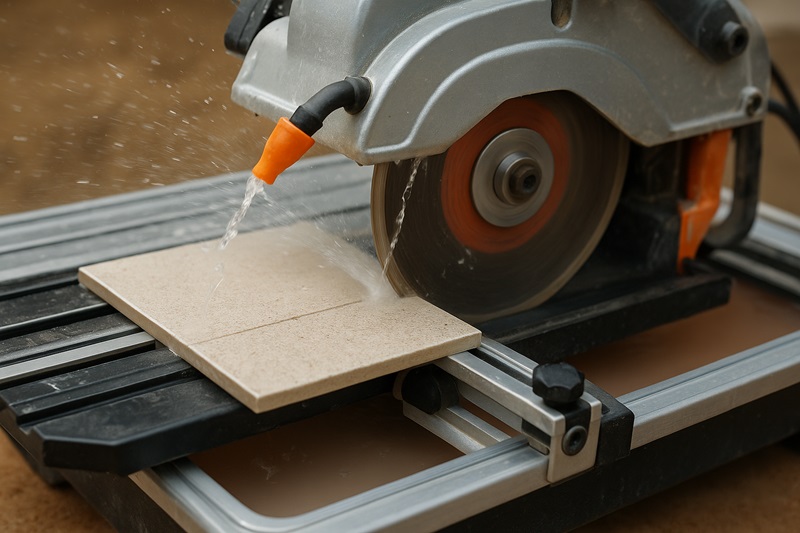
Tabletop wet cutters are the top pick for DIY users. They use a water-cooled diamond blade. The water keeps the blade cool, cuts down dust, and helps prevent chips. These cutters work well on ceramic, porcelain, and small stone tiles. They are great for bathrooms, kitchens, and most home projects.
Bridge or Overhead Rail Saws (Pro Level)
Bridge saws offer high precision. The tile stays still while the blade moves along a rail above it. This design creates smooth, straight cuts. These saws handle large tiles from 600 mm to more than 1200 mm. They can also cut marble, granite, and thick porcelain slabs. Contractors and pro installers use them often.
Handheld Electric Tile Cutters
Handheld cutters are light, small, and easy to carry. They are ideal for fast repairs and special cuts like curves and plunge cuts. You need a steady hand to get perfect straight lines. But for tight spaces and quick fixes, they are very useful.
Hybrid Wet/Dry Tile Cutters
Hybrid cutters can work with water or without it. This makes them flexible on different job sites. They are helpful outdoors or in places where water use is limited. With the right blade, they can cut many types of tiles and offer more options than standard wet cutters.
Power & Performance: Motor Strength and RPM
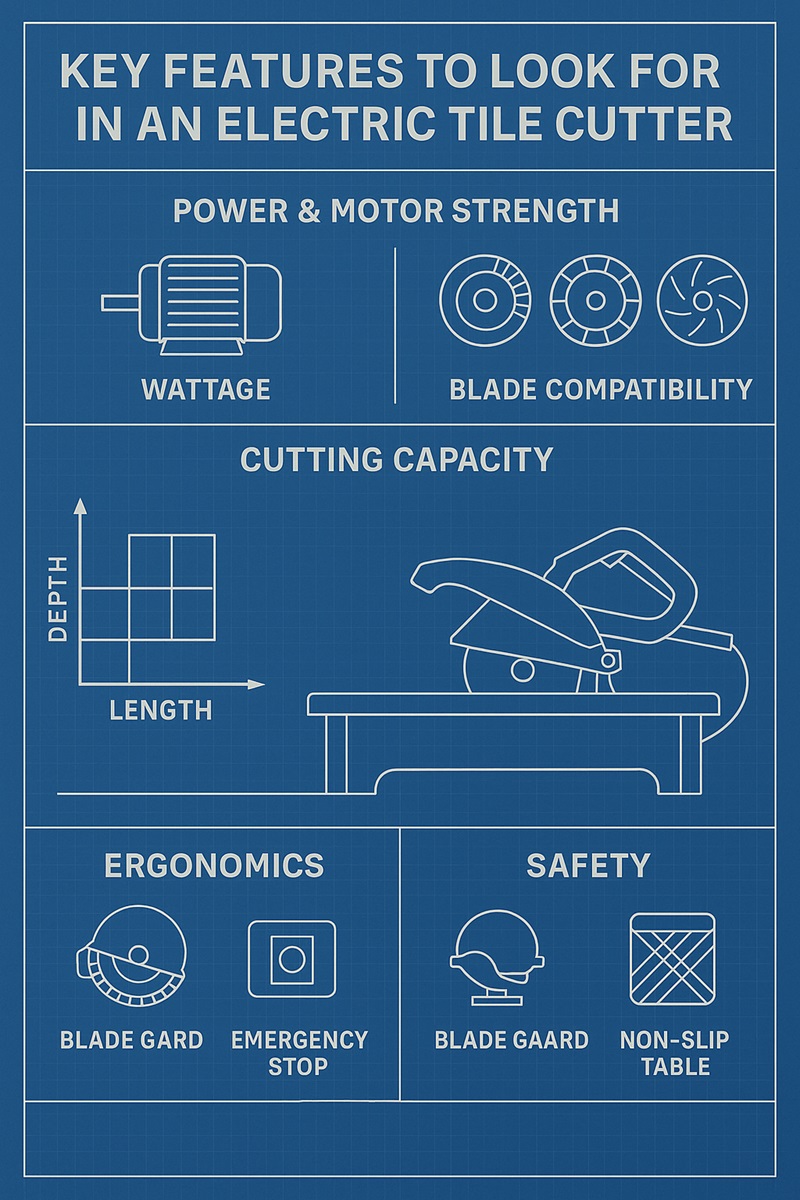
Motor power determines how easily a cutter handles dense materials like porcelain or granite.
Recommended Wattage
- DIY / light use: 800W–1200W
- Frequent or professional work: 1300W–1800W
- Stone & thick porcelain: 1800W+ heavy-duty motors
RPM (Rotations Per Minute)
Higher RPM generally means cleaner cuts and fewer chips.
- Most electric cutters range from 3,000–5,000 RPM
- Higher RPM is best for porcelain and dense stone
- Lower RPM sometimes works better for softer ceramic to avoid micro-chipping
The ideal machine balances high torque + high RPM to handle a range of tiles without bogging down.
Blade Quality, Diameter & Compatibility
The blade is responsible for 90% of the cut quality.
Always look for diamond-coated blades—the standard for modern tile cutting.
Common Blade Sizes
- 4.5″–5″ (115–125mm): Handheld cutters
- 7″ (180mm): Most tabletop saws
- 10″ (250mm): Bridge saws & pro equipment
Matching Blade to Material
- Ceramic: Standard continuous-rim diamond blade
- Porcelain: Hard-bond, high-quality diamond blade
- Marble / granite: Turbo or segmented diamond blades
- Glass tile: Ultra-fine continuous rim blade
Adjustable Cutting Angles
Look for:
- Bevel cuts (0–45°)
- Plunge cuts
- Depth adjustment
These settings give you flexibility for complex layouts, patterns, and edging.
Cutting Capacity: Depth, Length & Diagonal Cuts
Many buyers overlook cutting capacity—but it’s crucial.
What to Check
- Max tile thickness the blade can cut
- Max cutting length (straight cuts)
- Diagonal cutting capacity (tiles are longer corner-to-corner)
Typical Capacities
- Budget cutters: 330–450mm straight, 20mm thickness
- Mid-range: 500–650mm straight, 25–30mm thickness
- Professional bridge saws: 900–1200mm+, 35–40mm thickness
If you use large-format tiles, this section alone determines your machine choice.
Build Quality, Size & Accuracy Features
A sturdy, well-engineered frame translates directly into precision.
Look for:
- Rigid steel or aluminum table (no flexing)
- Anti-vibration supports
- Guide rails & measuring scales
- Locking fences for straight cuts
- Wide table extensions for big tiles
Compact vs. Full-Size Models
- Compact saws → great for tight job sites or small bathrooms
- Full-size saws → better stability for long or thick tiles
Stability = accuracy. Accuracy = fewer broken tiles.
Cooling System & Dust Control
Electric tile cutters generate friction, heat, and fine ceramic dust—so cooling and dust control matters for both safety and cut quality.
Water Cooling System
A good wet cutter should include:
- Large water reservoir
- Reliable pump or gravity-feed system
- Splash guards
- Easy-to-clean trays
Benefits of water:
- Prevents blade overheating
- Reduces tile chipping
- Extends blade life
- Minimizes dust
Dust Control
For dry cutters, look for:
- Dust extraction ports
- Sealed motor housings
- Integrated splash/dust shields
Especially important for indoor work.
Noise & Vibration Considerations (Often Overlooked)
Electric cutters can be loud—some over 95 dB.
Lower noise levels reduce fatigue in long sessions.
Useful Features:
- Soft-start motors
- Anti-vibration feet
- Heavy, stable bases
- Balanced blades
Less vibration also means straighter cuts.
User Comfort, Ergonomics & Safety
A tile cutter can be strong, but if it feels hard to use or unsafe, it can slow you down. The best machines focus on comfort and safety so each cut feels smooth and controlled.
Comfort starts with how the tool handles. A soft-start motor stops the sharp jump you get when a machine turns on. Clear angle scales make fast adjustments easy. Smooth sliding tables or rail systems help you guide the tile without pushing too hard. Small features—like large knobs or rubber handles—also matter. They reduce strain during long jobs and help you stay accurate.
Safety features are just as important. A full blade guard keeps your hands safe. Overload protection stops the motor if the tile is tougher than expected. A non-slip surface keeps the tile steady. An emergency stop switch lets you shut the machine off fast if something feels wrong. When these features work together with simple instructions, even beginners can cut with confidence.
The right mix of comfort and safety does more than improve results. It makes the whole job easier, smoother, and more predictable.
Maintenance & Longevity Tips
A well-maintained cutter lasts years longer.
Maintenance Essentials
- Clean the water tray after each use
- Inspect and tighten guide rails
- Replace blades before they fully dull
- Lubricate moving parts if manufacturer recommends
- Check pump flow regularly
A short maintenance routine dramatically improves accuracy.
Price Tiers: What to Expect at Every Budget
Budget ($80–$150)
- For occasional DIY
- Smaller tiles
- Basic continuous-rim blade
- Limited cutting capacity
Mid-Range ($150–$400)
- Best value-for-money segment
- Good for porcelain
- Better guides and fences
- Better water control
Professional ($400–$1000+)
- Large-format tile handling
- Thicker stone capability
- Precision rails
- Heavy-duty motors
Choose based on how often you cut tiles—and what kinds.
Which Cutter for Which Tile?
| Tile Material | Best Cutter Type | Blade Type |
| Ceramic | Tabletop wet saw | Standard diamond |
| Porcelain | Mid/high-end wet cutter | Hard-bond diamond |
| Marble | Bridge saw | Turbo rim |
| Granite | Bridge saw | Segmented rim |
| Glass tile | Wet cutter | Ultra-fine rim |
Electric Tile Cutter Comparison Table
| Feature | Budget Models | Mid-Range | Professional |
| Motor Power | 600–800W | 800–1500W | 1500–2200W |
| Blade Size | 4″–7″ | 7″ | 7″–10″ |
| Cutting Length | Up to 450mm | 500–650mm | 900–1200mm+ |
| Tile Thickness | 10–15mm | 20–30mm | 30–40mm |
| Water System | Basic | Medium | High precision |
| Ideal For | DIY | Serious DIY / trades | Tile installers |
Frequently Asked Questions
Is a wet tile cutter better than a dry cutter?
Yes—wet cutters offer cleaner cuts, lower dust, and better blade life.
Can I cut porcelain with any electric tile cutter?
No. Porcelain requires a higher-power motor and a porcelain-rated diamond blade.
Do I need a 10-inch blade?
Only if you’re cutting large-format tiles or thick stone.
Final Thoughts
Choosing the right electric tile cutter is not about buying the strongest machine. It is about finding the tool that fits your project. When you look at motor power, blade quality, cutting size, cooling, safety, and upkeep, you can pick a cutter that gives clean and accurate results every time.
A good machine saves time, cuts down waste, and makes the whole job smoother. Buy from a trusted source, make sure parts are easy to replace, and choose a cutter that matches the tiles you use and the way you work in the long run.