Standing desks are an important aspect of contemporary working space that contributes to keeping people active and comfortable even during prolonged working hours. With remote work and home offices becoming more and more popular, a number of professionals are spending money on adjustable desks that enable them to alternate between standing and sitting throughout the day. Nevertheless, stability is one of the factors that can define whether a standing desk makes the working experience really better or not.
The stable 4 legged standing desk will provide stability to the monitors, the keyboards, and other equipment. The lack of adequate stability may cause the wobbling or shaking of a desk, making it difficult to work effectively. Knowledge of what makes standing desks stable may assist customers in arriving at a better choice of the proper model to use in a workplace.
Adjustable desks help you move more during the day. Good ergonomics guides say your desk must support the right placement of your monitor, keyboard, and other tools. This helps reduce strain. OSHA says a well-set desk lets you place items properly. It also cuts down on awkward movements. Mayo Clinic says moving more and sitting less is good for your health.
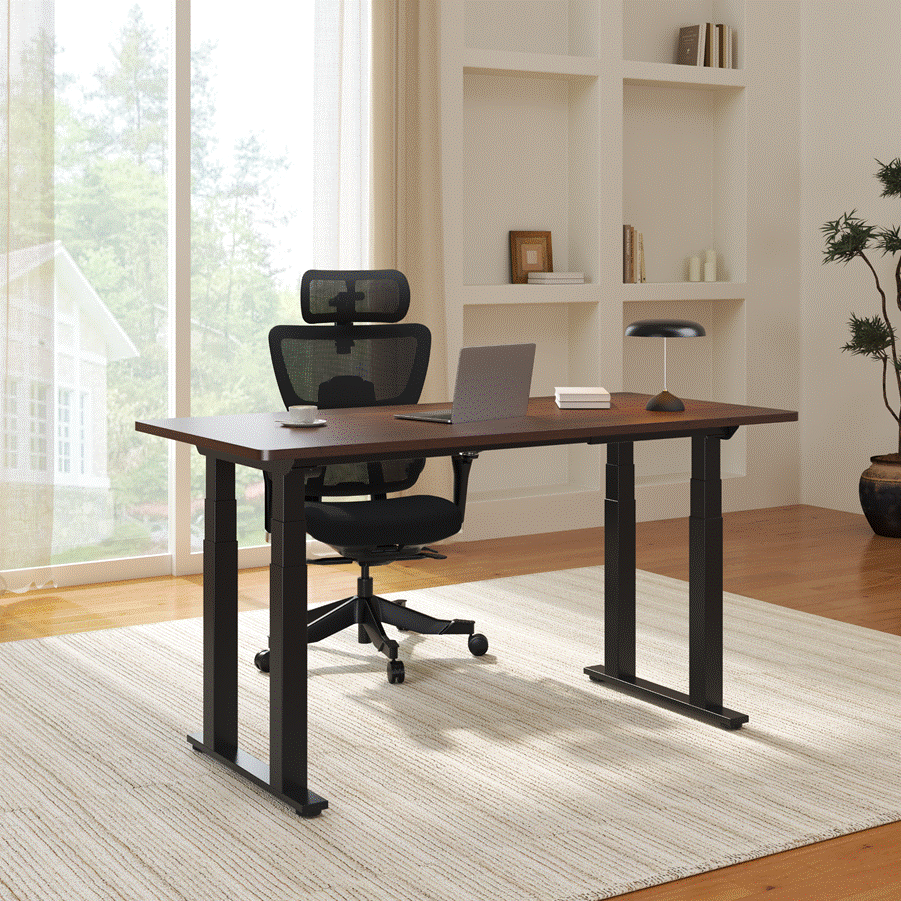
Why Stability Matters in a Standing Desk
One of the most significant features of any standing desk is stability, since it directly influences productivity and comfort. Trembling desks during typing or height adjustment may be irritating and annoying to the user. In the long run, this instability may make a sit-stand workstation less effective.
A desk table holds the monitors, laptops, and accessories steadfastly. This is of particular significance to individuals who have various monitors or heavy machinery. The requirement of big setups makes a large and stable desk frame mostly dependable among designers, programmers, and engineers. When the weight cannot be evenly distributed over the structure, the desk will either tilt or wobble.
Safety is also a factor of stability. The chair can swing unintentionally and alter the placement and even the fall of equipment. Thus, a standing desk is not only constructed well, but it also secures the office machinery, which might be of great importance.
Your desk must also stay stable when you sit and stand. OSHA notes that keyboard height should adjust for both positions. The desk surface should fit your monitor, keyboard, and mouse with ease. A desk that shakes at full height is not truly useful. It falls short in real use.
Frame Design and Structure
The frame design of the desk is one of the largest stability factors. The arrangement of the legs, crossbars, and support beams is what dictates the effectiveness of the desk to maintain balance in the process of movement, as well as the support of weight.
Some low-end standing desks have two-leg construction without much support. Although this design can be effective in light set-ups, it can have difficulties maintaining stability when its height is extended to higher heights. Further developed desks also have other structural features like crossbeam or four-legged designs.
The four-leg standing desk design is usually more stable since the weight is spread to more weight-supporting points. This design minimizes the risk of wobbling and provides stability to the desk even when there is an uneven weight on the surface. When the need arises to install heavy equipment or numerous monitors on the desk, professionals tend to have a more reinforced frame.
Motor System and Lifting Mechanism
The stability of a standing desk is also important with the lifting mechanism. Adjustable desks will have electric motors that can be used to raise or lower the desk. The number and the location of these motors may determine how smoothly the desk moves.
Dual motors are common with numerous mid-range models. As compared to a four-leg standing desk that has two motors, two legs are lifted by one motor. This puts more pressure on the motors, which can cause more weariness and lower longevity over time. Despite the possibility of giving balanced lifting on a dual-motor system, it might not work effectively when the weight is heavier.
A four-motor system, on the other hand, allocates one motor per leg. This design spreads out the lifting load evenly, and the height changes become smoother, performance is improved, and the long-term reliability increases. Having a more balanced and stronger lifting system, the desk will be able to swing between heights in a stable and constant way. Regular functioning of all legs will also ensure a flat surface and avoid sudden dropping of the movement on one side.
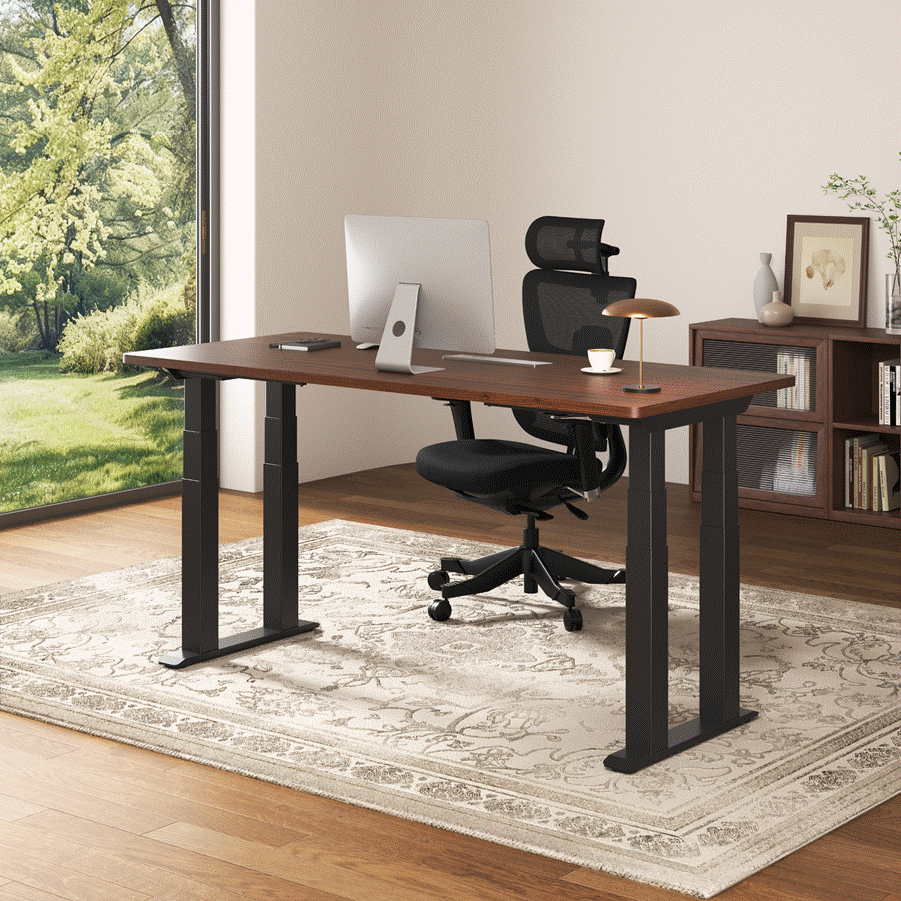
Material Quality and Build Strength
The most stable standing desk frame and desktop material have a strong influence on the overall stability. The quality of a standing desk is such that steel is mostly used as the frame due to its high strength and durability. Heavier metal parts are used to prevent bending or flexing of heavy loads.
Poorer quality desks can be made out of thinner metal or lighter materials; this can decrease the cost of manufacture, but often the stability can be lost. The weaker materials can also start to loosen or wear over time, resulting in more wobble.
The desktop in itself also adds to stability. A well-built, solid desktop could be used to spread the weight better on the frame. Strong engineered wood, bamboo, or solid wood desktops tend to be structurally sound as compared to thinner surfaces.
Height Range and Desk Extension
The stability of a standing desk is also a factor of the range of height. The center of gravity of the desk varies as it continues to grow upwards. Tall standing postures inherently make it easier to move as the desk legs are further up off the floor.
Standing desks should be of high quality, and that is why they are designed so. Manufacturers tend to strengthen the lifting columns and frame system to handle the weight at full height as well. Other models have other support features to reduce the wobbling during full extension.
In the case of taller users, one may choose a desk that is focused on longer height ranges, which will enhance overall performance and minimize undesired movement.
How to Choose the Right Standing Desk
When choosing the right standing desk, the main features that make it stable need to be assessed. The frame structure, motor system, materials, and weight capacity are some of the aspects that buyers would want to consider before making a decision.
It also helps to check if your desk meets safety standards. BIFMA sets safety and performance rules for office furniture. Their standards cover height-adjustable desks. This gives buyers a real benchmark. It is more reliable than claims on a product page. Still, you should also check the frame and motor before you buy.
The designed desks must be comfortable when sitting and standing. The setting to be set up should be taken into consideration when comparing alternatives. A multi-monitor workstation or a heavy-equipped workstation will need a frame that is more powerful and carries more weight than a minimum laptop setup.
Space and layout in the workspace are also factors. A smaller-sized desk that fits inside the room without much space to spare on important equipment will make the work environment more efficient.
Conclusion
The hallmark that makes the difference between a working standing desk and an annoying one is stability. The frame design and the quality of the materials used to design it, motor systems, weight capacity, and height range, among others, each of them helps in determining how stable a desk will be in day-to-day use. When the factors are carefully considered and compared to the requirements of the workspace, the buyers will be able to choose a desk that will provide better productivity, safety, and have the power to withstand time. Having a comfortable standing desk is not merely a matter of comfort — it is a matter of a stable, well-built, and functional environment that will help you succeed in your profession in the long term.