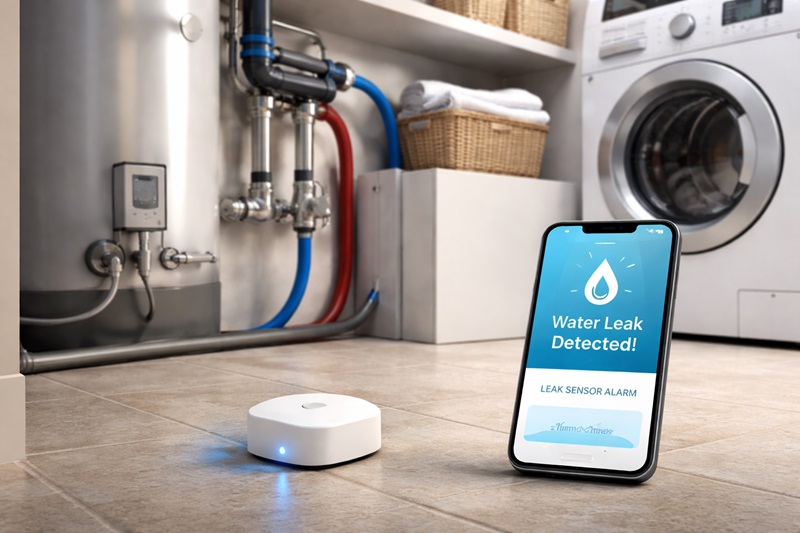

A water leak rarely starts as a disaster. More often, it starts as a loose supply line, a failing toilet flapper, a slow drip under a sink, or a water heater that gives way when nobody is home. The reason leak detection matters is simple: the sooner you catch a problem, the less water you waste and the less damage your home has to absorb.
That is not a niche issue. The EPA says household leaks waste nearly 1 trillion gallons of water each year in the United States, and the average home’s leaks can waste more than 9,300 gallons annually. At the same time, insurance data shows water damage and freezing remain one of the biggest home-claim categories after wind and hail. From 2019 to 2023, 1.5% of insured homes filed a water-damage or freezing claim, with an average claim severity of $15,400.
That is why water leak detection systems have moved from “nice extra” to practical home-protection equipment. And in 2026, the category got a meaningful authority boost: EPA WaterSense published a new consumer guide specifically explaining how leak detection and flow monitoring devices work, how to choose them, and how to maintain them.
What is a water leak detection system?
A water leak detection system is a device or group of devices that helps detect plumbing leaks early. Some sensors detect water in specific locations, such as under sinks or behind washing machines, while others monitor water flow through the home to identify unusual use. More advanced systems can also shut off the main water supply automatically to help prevent major damage.
Why a water leak detection system now makes more sense than ever
Homeowners used to think of leak alarms as simple gadgets placed near a water heater or washing machine. That still describes one part of the category, but the market has matured. Today’s systems range from low-cost moisture sensors to main-line flow monitors and shutoff valves that can cut water to the house automatically when a major leak is detected. EPA’s current framework divides the space into two main approaches: moisture detection, which senses unexpected wetness at a fixture or floor level, and flow monitoring, which tracks water movement and flags abnormal use patterns that may indicate a leak.
The value is broader than emergency response. A good system can help reduce wasted water, limit mold risk after leaks, and lower the odds that a small plumbing failure turns into a major repair project. Wet materials should be dried within 24 to 48 hours to reduce the chance of mold growth, according to EPA and CDC guidance.
There is also a financial case. EPA’s 2026 guide notes that some insurers offer discounts for homes with leak detection or flow-monitoring devices, but that point needs to be stated carefully: discounts exist, yet they vary by insurer, product type, and state. Amica and Nationwide both advertise leak-detection-related discounts or programs, but neither treats savings as universal.
The three types of home leak protection that matter most
The smartest way to understand the category is not by brand names, but by what each device is actually good at.
1. Point-of-use water leak detectors
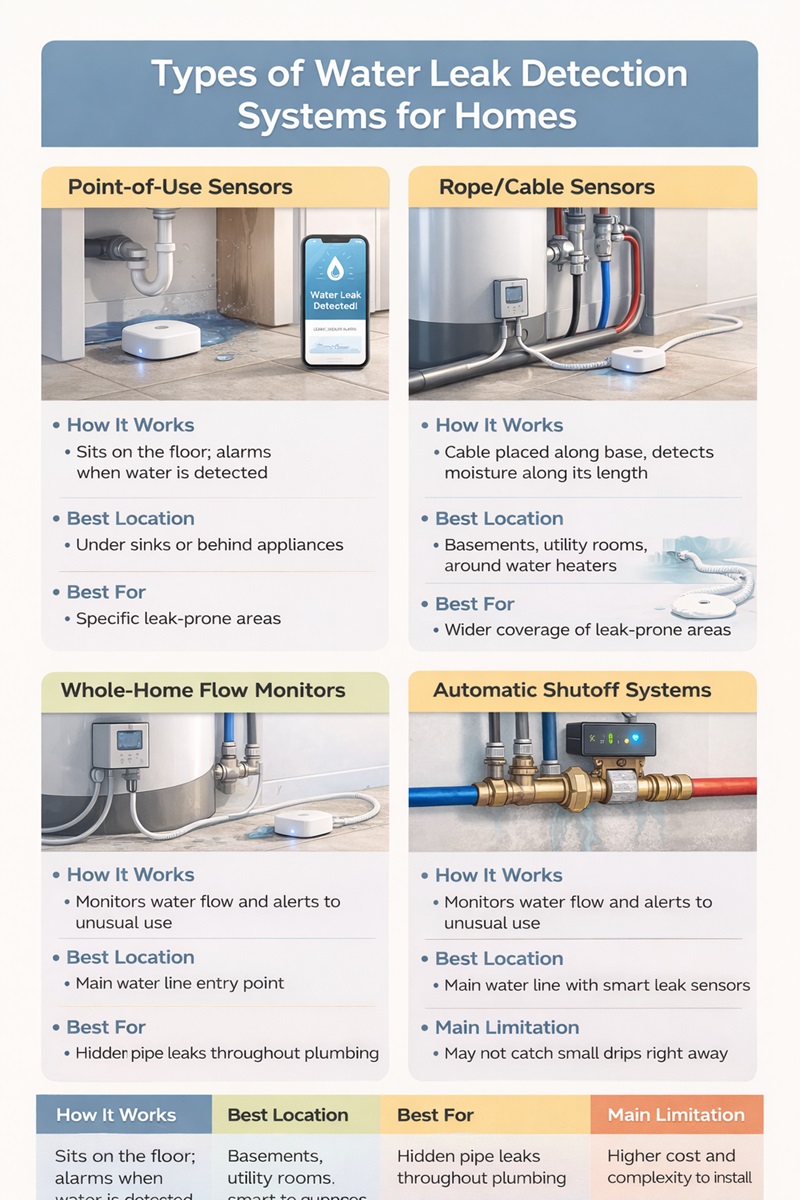
These are the small sensors homeowners place under sinks, behind washing machines, next to water heaters, near sump pumps, or under HVAC condensate lines. When water touches the sensor contacts, the unit sounds an alarm or sends a phone alert.
EPA’s guide treats these as a practical first line of defense for targeted, leak-prone areas. Their strength is simplicity. They are usually inexpensive, often DIY-friendly, and work well where you already know a leak is likely to show up at floor level. Their weakness is just as important: they may miss leaks that happen upstream, inside walls, or elsewhere in the house.
For many homes, these remain the best starting point. A homeowner does not need a full smart-plumbing overhaul to get real protection from a washing machine hose failure or a slow water-heater seep.
2. Flow-monitoring leak detection devices
These systems monitor how water moves through your plumbing. Many are installed on the main line, either at the meter or where water enters the home. Instead of waiting for a puddle to form, they watch for patterns like continuous low flow, extended run time, or unusual overnight usage.
This is where the category becomes more useful for hidden leaks. EPA says point-of-entry devices are generally better equipped than point-of-use devices to detect leaks across the whole home because they monitor total water use rather than moisture in one location.
The tradeoff is cost and complexity. Main-line systems often require a plumber, and they depend more heavily on calibration, app setup, and reliable power or connectivity. Still, for larger homes, older plumbing, second homes, or owners who travel often, flow monitoring solves a problem that a basic floor sensor cannot.
3. Automatic shutoff systems
This is the highest-protection tier. These systems combine leak detection with a valve that can stop water flow automatically when a serious leak is detected. EPA notes that in catastrophic events such as a burst pipe, failed water heater, or washing-machine hose failure, automatic shutoff can prevent large-scale damage and the costs that follow.
For many homeowners, that is the real dividing line. A local alarm helps if you are home. A smart alert helps if you can respond quickly. An automatic shutoff helps when nobody can act in time.
Water alarm vs smart leak finder: the difference that matters
A lot of consumer content blurs “water alarm” and “leak detection system” into the same thing. They are related, but they are not interchangeable.
A basic water alarm is local protection. It makes noise when water reaches it. That is useful in high-risk, high-traffic areas and remains one of the cheapest ways to improve protection fast.
A smart leak finder adds remote awareness. It sends an alert to your phone, may log temperature or humidity, and may integrate with a wider home platform.
A whole-home detection system goes further by monitoring the plumbing network itself and, in some cases, taking action through an automatic shutoff valve.
That distinction matters because the right choice depends less on budget alone than on how the home is used. An occupied apartment may be well served by a handful of local alarms. A detached house with a basement, attic HVAC equipment, and long periods of vacancy may need something closer to whole-home monitoring.
Where water leak detectors should go first
Placement matters as much as product choice. A mediocre sensor in the right place protects more than an advanced system installed with blind spots.
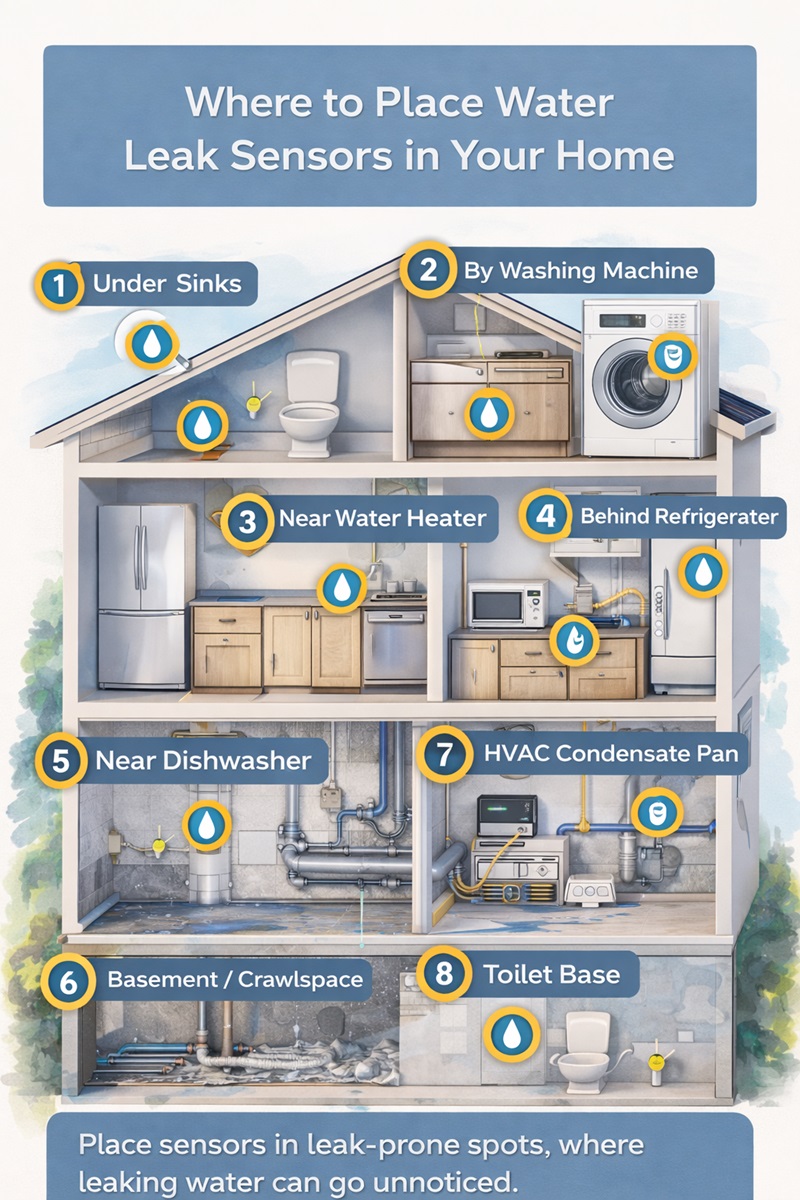
The best first locations are the ones with both high leak risk and high damage potential:
Laundry area
Washing-machine hoses and drain issues remain one of the classic sudden-loss points in a home. Put a sensor behind or under the washer.
Water heater
A failing tank, relief valve issue, or slow seam leak can release enough water to damage flooring and walls before anyone notices. EPA specifically points to water heaters as a key leak-prone area for moisture sensors.
Under kitchen and bathroom sinks
Supply connections, shutoff valves, drain traps, and garbage disposals all fail in ordinary ways. These are low-cost, high-value sensor locations.
Toilets
EPA’s 2026 guide notes that about 20% of toilets leak, which makes toilets a stronger monitoring target than many homeowners realize. Some in-line devices are designed specifically to catch continuous fill-valve flow that points to a leaking flapper or similar malfunction.
Basement, crawlspace, or utility room
These areas often hide water longer, which makes them good candidates for rope-style or broader-coverage sensing.
HVAC condensate pans and nearby floor areas
Air-conditioning equipment can create water problems that a main-line flow monitor will not always catch, especially when condensate rather than supply-line water is the issue. EPA specifically notes that moisture detection near an air-conditioning unit can catch leaks a point-of-entry flow monitor may not identify.
Refrigerator ice maker line and dishwasher area
These are common slow-leak zones that can damage cabinets and subflooring before visible staining appears.
Which leak detection setup fits which kind of home
The category becomes easier to shop when you stop asking, “What is the best device?” and start asking, “What is the best setup for this home?”
Small apartment or condo
Start with point sensors under sinks, near toilets, behind the washing machine, and at the water heater if there is one. A loud local alarm or simple app alert may be enough.
Typical single-family house
A mix works best: several point sensors in high-risk rooms plus at least one smart sensor that can notify you remotely.
Larger home or older plumbing system
Whole-home flow monitoring becomes more useful because hidden leaks are harder to catch visually and may run longer before discovery.
Vacation home, second home, or frequent-travel household
Automatic shutoff becomes much more compelling here. Protection that depends on someone hearing an alarm is weaker when the house is empty.
Slab-foundation or hard-to-access plumbing layout
Point sensors still help at fixtures, but unexplained meter movement, pressure loss, or moisture signs may call for a residential plumbing expert or leak specialist using professional equipment. Acoustic tools are real and effective, but they belong primarily in professional diagnostics, not in the average homeowner’s shopping cart.
The limitations homeowners should know before buying
This is where a lot of weaker articles fail. Leak detection systems are useful, but they do not solve every water problem.
A floor sensor may not detect a leak until water actually reaches the floor. A main-line flow monitor may not identify every small or highly intermittent drip right away. Neither system replaces basic maintenance. Roof leaks, groundwater intrusion, exterior drainage failures, and sewer backups may fall partly or entirely outside what a plumbing-focused leak detector is designed to catch.
Condensation can also confuse some devices. EPA advises buyers to look for adjustable sensitivity on moisture sensors so they do not trigger unnecessarily in high-humidity conditions.
Connectivity is another weak point. If a smart sensor depends on Wi-Fi or cloud access, a power outage, password change, or router issue can interrupt notifications. EPA’s guide specifically recommends checking internet-connected devices after outages or provider changes to make sure they stay online.
The latest development: leak detection is becoming part of the smarter home stack
The strongest recent shift is not just that leak detection devices are more common. It is that they are becoming more standardized and more integrated.
EPA WaterSense’s new 2026 guide gives the category a clearer consumer framework than it had before, especially around device selection, maintenance, and the distinction between moisture sensors and flow monitors.
At the same time, smart-home interoperability has improved. The Connectivity Standards Alliance said Matter 1.3 added support for leak and freeze detectors and controllable water valves, which points toward a market where leak response is less siloed inside one proprietary app and more connected across the home.
That does not mean every homeowner needs a fully integrated ecosystem. It does mean the category is maturing beyond “small puck that beeps when wet.”
What to look for in a water alarm or leak detection device
A better buying checklist is not about flashy packaging. It is about whether the product solves the actual failure mode you care about.
Look first at detection method. If you want to catch a puddle under a fixture, a moisture sensor works. If you want to catch abnormal water use anywhere in the home, look at flow monitoring.
Then look at notification method. A local siren is enough only when someone is likely to hear it. Remote alerts matter if the home is empty during the day, overnight, or for travel.
Then consider response capability. If damage prevention matters more than simple awareness, automatic shutoff deserves serious attention.
Installation also matters. EPA notes that in-line point-of-entry devices will likely require a plumber and may need nearby power depending on the design.
Battery life, app quality, and system expandability matter too, but they are secondary to the core question: does this device detect the kind of leak your home is most likely to suffer?
Insurance: useful benefit, not guaranteed payoff
Leak detection can support a better insurance posture, but the article should not overpromise. EPA says some insurers offer discounts for homes with these devices. Amica promotes discounts for many smart-home safety devices, including leak systems, while Nationwide says participants in its smart-home program may receive a discount depending on program terms and activation requirements.
That is real, but it is not universal. Savings vary by carrier, state, policy type, and device program. The stronger editorial point is this: the bigger payoff often comes from avoiding or limiting a major water loss, not from assuming the premium reduction alone will justify the purchase.
Maintenance: the part people forget
A leak detector that has been knocked out of place, coated with dust, left on a dead battery, or disconnected from Wi-Fi is not doing much.
EPA’s 2026 guidance recommends keeping moisture sensors clean, replacing batteries as needed, testing devices according to the product instructions, calibrating flow monitors periodically when required, and confirming that internet-connected devices remain online after outages or network changes.
That is the quiet reality of this category. The technology works best when homeowners treat it less like a decorative smart-home accessory and more like a smoke alarm: install it thoughtfully, test it regularly, and assume maintenance is part of ownership.
The bottom line
A water leak detection system is no longer just a gadget for cautious homeowners. It is a practical way to reduce wasted water, catch hidden plumbing problems earlier, and limit the kind of damage that turns a small failure into an expensive restoration job.
The right setup depends on the home. For some people, that means a few point sensors under the most likely trouble spots. For others, especially in larger or frequently empty homes, it means stepping up to main-line flow monitoring and automatic shutoff.
The most useful way to think about the category is not “smart” versus “basic.” It is this: what kind of leak do you need to catch, how quickly do you need to know, and can the system do anything before the damage spreads?