
A U.S.-focused, neutral, reference-backed editorial on vacancy, deterioration, dumping, and when “speed” actually helps.
In the United States, a home that sits vacant and unmanaged for long stretches often creates avoidable waste: damaged materials that get torn out, dumped debris that requires municipal cleanup, and “idle” energy use to keep the building from failing. This matters at scale because construction and demolition (C&D) debris is one of the largest waste streams in the country—EPA estimates 600 million tons were generated in 2018.
A faster sale can reduce that waste when it shortens the time-to-stabilization (security + moisture control + responsible rehab). But speed alone isn’t a guarantee—some fast transfers can increase waste if they lead to unnecessary tear-outs or delayed stewardship.
What we mean by vacancy, a fast sale, and waste
Vacancy (what counts here)
For waste outcomes, vacancy risk is highest when a property is:
- unoccupied and
- not receiving routine checks for leaks, humidity, pests, and security.
The U.S. has multiple ways to track vacancy. One widely used signal is USPS “vacant” status—often defined as mail not collected for a sustained period (commonly 90+ days in many vacancy-indicator methodologies).
Fast sale (what it practically means)
A “fast sale” is any transfer that meaningfully reduces the period a home is empty and unmanaged compared with a typical transaction timeline in that local market.
Homeowners considering a faster sale can learn more about direct-to-buyer and other expedited transaction options that may shorten vacancy periods. In many cases, a quicker closing shifts responsibility sooner to a new owner who can secure the property and plan any needed rehabilitation or reuse.
Neighborhood waste (more than trash bags)
In this context, “waste” includes:
- Material waste: drywall, insulation, flooring, cabinetry, roofing, appliances
- Bulky waste & dumping: furniture, bags, construction debris
- Resource waste: energy/water losses from inefficient operations or undetected leaks.
Why prolonged vacancy tends to generate more physical waste
1) Moisture is the biggest waste multiplier
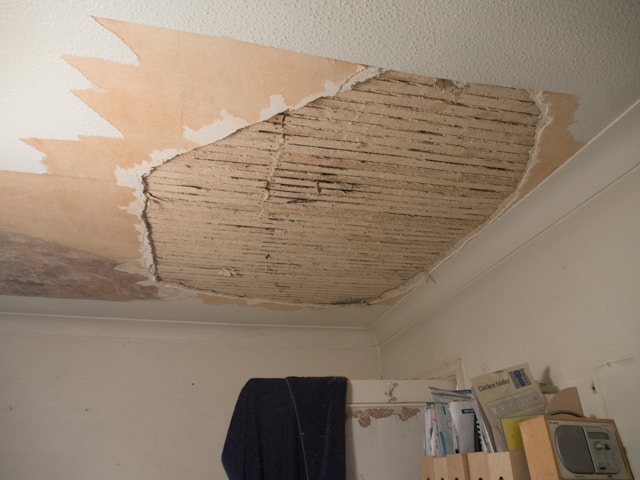
Moisture problems that would be minor in an occupied home can become major in a vacant one if no one notices them quickly. Public health and building guidance consistently emphasizes that mold and related damage are prevented primarily through moisture control and timely response to water intrusion.
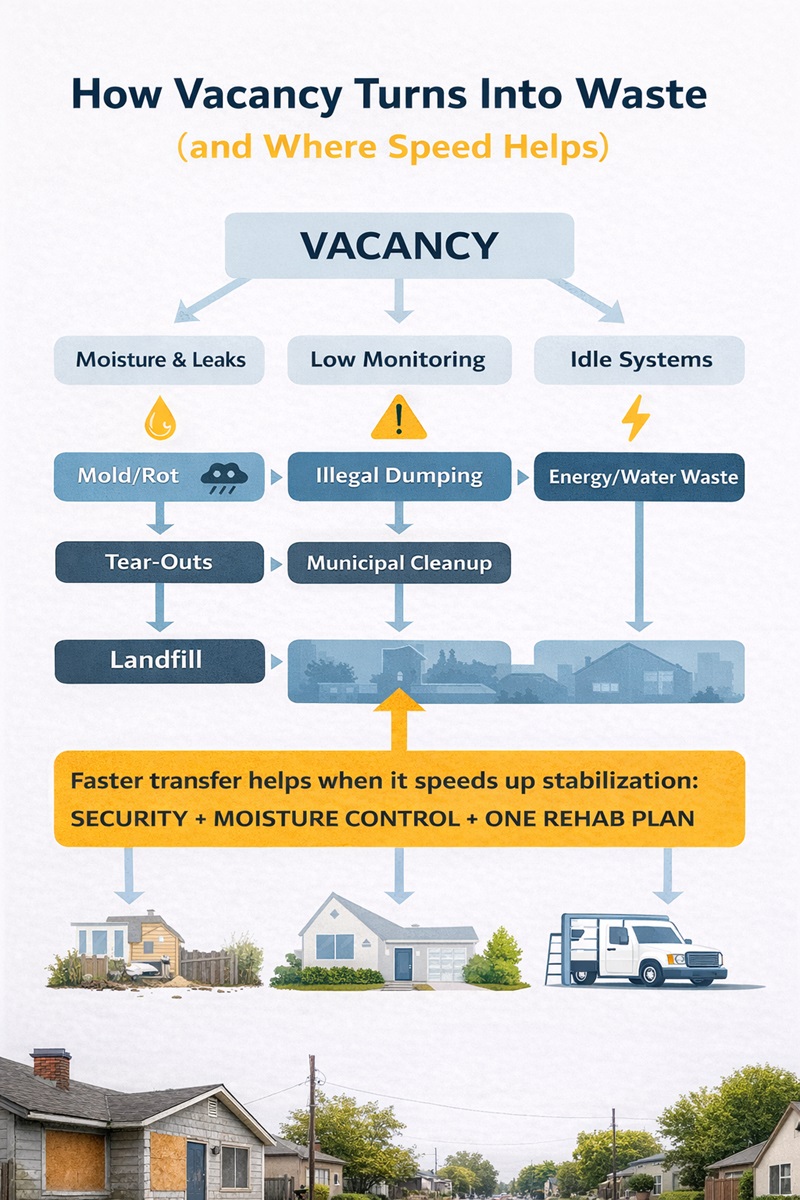
Waste pathway: leak/condensation → damp materials → mold/rot → tear-out → landfill.
2) Unmanaged properties attract dumping and disorder
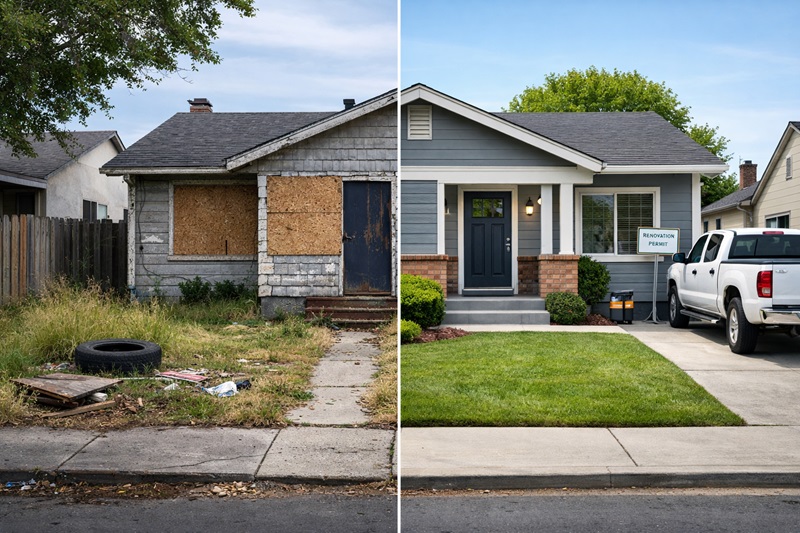
Vacant properties can become “low surveillance” sites. Studies on illegal dumping commonly identify place-based factors such as physical disorder and limited monitoring as contributors.
Municipal programs that target blight and dumping frequently treat vacancy management as part of the solution set (because dumping and neglect often cluster).
Waste pathway: visible vacancy/disorder → dumping → cleanup costs + bulky waste hauling.
3) Building systems deteriorate when “idle”
Vacant homes often run into compounding issues: stagnant plumbing, unnoticed water leaks, HVAC shut down or mismanaged, and humidity creep—especially in humid climates or shoulder seasons. The U.S. Department of Energy’s guidance on preventing frozen pipes underscores the tradeoffs of turning temperatures down too far and the need to manage risk (a practical example of how “idle” operations still require oversight).
How faster sales can reduce waste
A faster sale reduces neighborhood waste when it results in earlier stabilization, meaning:
- Earlier accountability: Someone is clearly responsible for securing the site and preventing dumping.
- Shorter compounding window: Less time for moisture, vandalism, pests, and debris to escalate.
- One coherent rehab plan (instead of repeated, partial “do-overs”): Reduces redundant tear-outs and premature disposal—important given EPA’s finding that demolition is a dominant driver of C&D generation.
When “fast” can backfire (and increase waste)
A fast transfer can increase waste when it leads to:
- Cosmetic flipping with premature replacement (perfectly usable cabinets/counters/flooring)
- Tear-down decisions without evaluating repairability
- “Paper transfers” where the property remains vacant and unmanaged under a new owner
The practical takeaway is: The waste outcome depends less on sale speed and more on how quickly the home becomes maintained, secured, and responsibly rehabbed.
Neutral pathways that may shorten vacancy in the U.S.
Different sellers use different routes depending on condition, urgency, liens, and market:
- Conventional listing with a priced-to-move strategy + pre-list inspection planning
- Direct-to-buyer sales (varies widely—outcomes depend on buyer practices and follow-through)
- Auctions for distressed properties in some jurisdictions
- Local land bank / stabilization programs where available (often tied to neighborhood stabilization and vacancy reduction goals)
Takeaway: “Sale speed matters less than stabilization. A quick transfer reduces waste only when it leads to prompt security, moisture control, and a disciplined rehab plan.
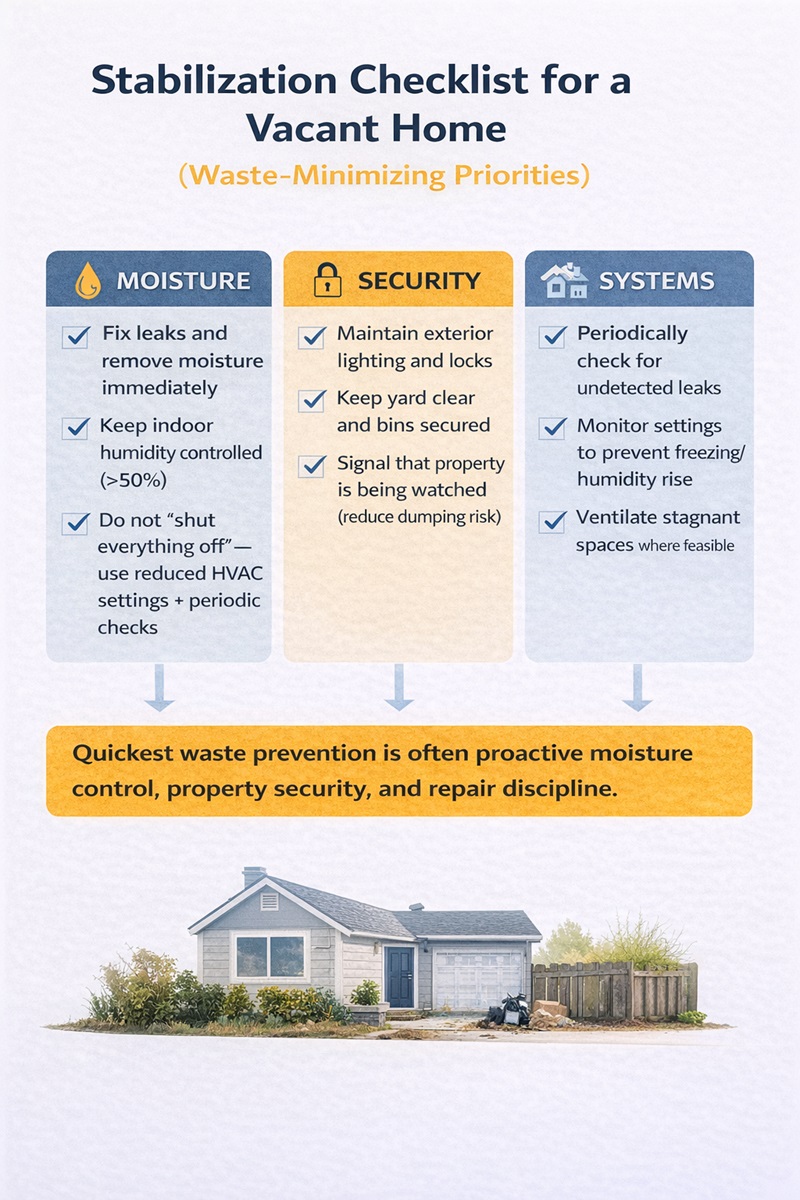
Waste-minimizing checklist (works whether you sell fast or not)
If a home may be empty for weeks or months, the lowest-cost waste prevention is usually basic stewardship:
Moisture & building health
- Address leaks and moisture sources immediately; moisture control is central to preventing mold-related damage.
- Maintain safe temperature/humidity ranges and periodic checks, especially in humid regions.
Security & dumping prevention
- Keep exterior maintained (lighting, locks, basic yard care) to reduce “no one’s watching” signals that correlate with dumping/disorder patterns.
Renovation discipline
- Avoid repeated partial remodels intended only to “refresh the listing.” One well-scoped plan typically produces less redundant debris.
Conclusion
In the U.S., prolonged vacancy can act like a waste amplifier: moisture damage drives tear-outs, disorder increases dumping risk, and unmanaged “idle” operation wastes energy and water. EPA’s C&D debris figures provide the macro-level reason this matters—preventing avoidable demolition and tear-outs is a meaningful lever in a very large waste stream.
Faster home sales can reduce neighborhood waste when they shorten the time to stabilization and enable a single, responsible rehabilitation plan. But speed isn’t inherently “green.” The environmentally better outcome is the one where ownership responsibility returns quickly, the home is secured, moisture is managed, and upgrades are planned to minimize unnecessary replacement.