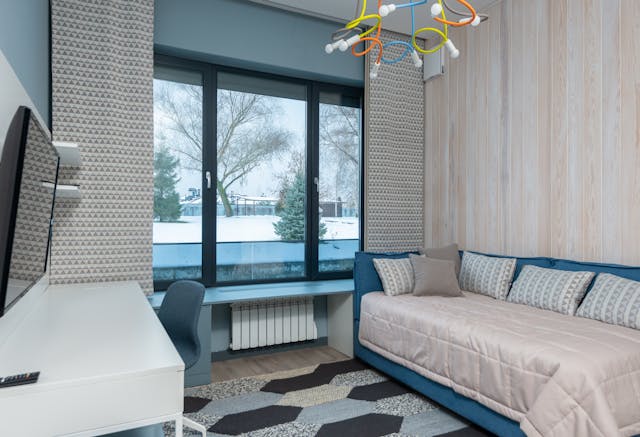

Heating a large room is rarely a thermostat problem on its own. In real homes, the trouble usually comes from heat loss. Open-plan layouts, tall ceilings, long outside walls, and big glazed areas all let warmth escape faster. The radiator then has to replace that lost heat at a steady rate, not just blast out warmth for a few minutes.
That is where double panel radiators earn their place.
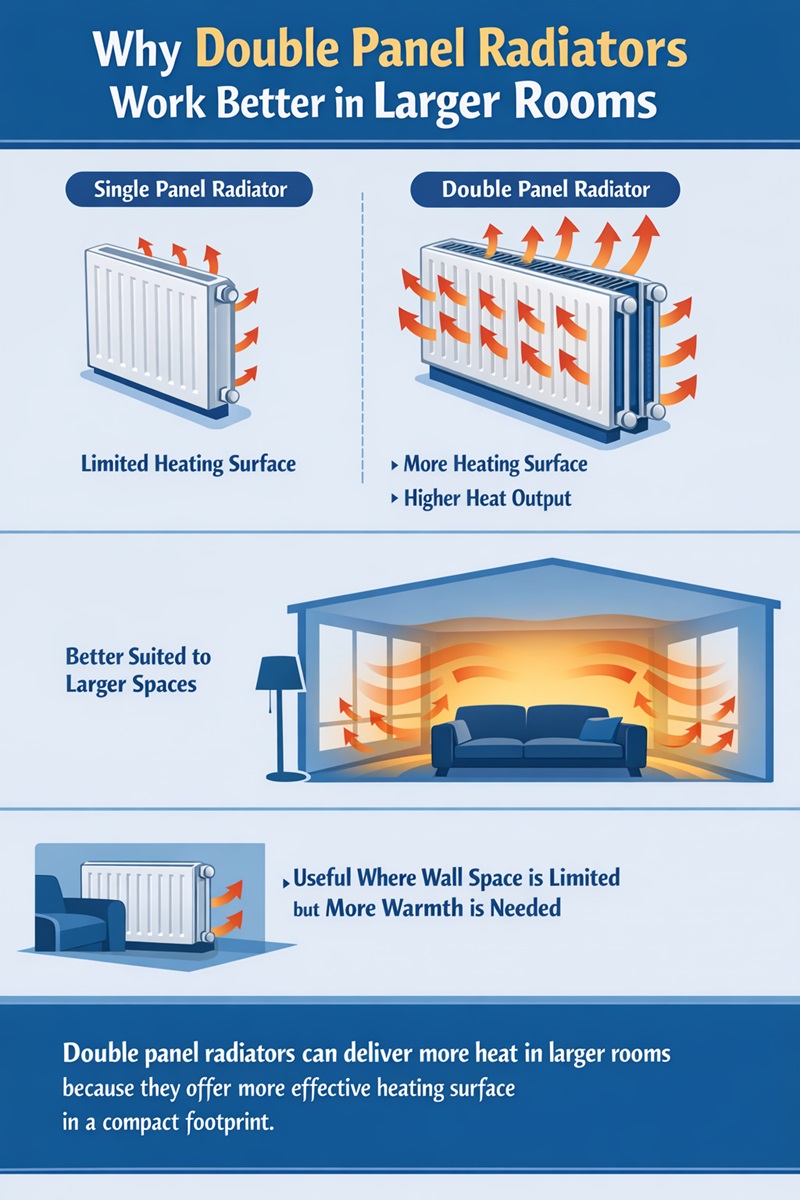
They are often a strong fit for larger rooms because they offer more active heating surface than a single panel model of similar width. That extra surface helps the radiator release more heat into the room, which matters most in spaces that lose heat quickly or need a higher output to stay comfortable.
What a double panel radiator really is
A double panel radiator uses two steel panels instead of one. Many models also include convector fins between or behind those panels. Those fins help warm the passing air, which improves how much heat the radiator can push into the room.
That point matters more than the product label. A radiator’s output does not come from panel count alone. It comes from the full design, including height, width, panel arrangement, fins, and the temperature of the water moving through it. A well-sized double panel radiator can therefore give a room far more usable heat than a smaller single panel unit fixed in the same place.
Why larger rooms put more pressure on the radiator
Bigger rooms usually need more heat because they contain more air and often have more surfaces losing warmth to the outside. A compact bedroom and a large kitchen-diner do not ask the same thing from a heating system, even if the thermostat reading is identical.
Over time, many homeowners have treated radiator choice as a rough guess. That works badly in larger rooms. The better question is simple: how much heat is the room losing, and how much output is needed to hold a stable indoor temperature?
That question has become more important as low-temperature heating has moved into the mainstream. Energy Saving Trust says heat pumps work best at lower flow temperatures, often up to around 45°C, and larger radiators help deliver the same room heat at those lower temperatures. In plain terms, a radiator that felt adequate on an older high-temperature boiler setup may no longer be enough once the system runs cooler.
How double panel radiators improve heat output
The core benefit is straightforward. A double panel radiator can release more heat over the same period than a comparable single panel radiator because it has more working surface.
That happens in three main ways.
First, the extra panel increases the area available to transfer heat into the room. Second, convector fins increase contact with moving air, which helps spread warmth more quickly. Third, the larger body of the radiator gives a room a stronger and steadier heat source, which is useful in wider spaces where warmth has farther to travel.
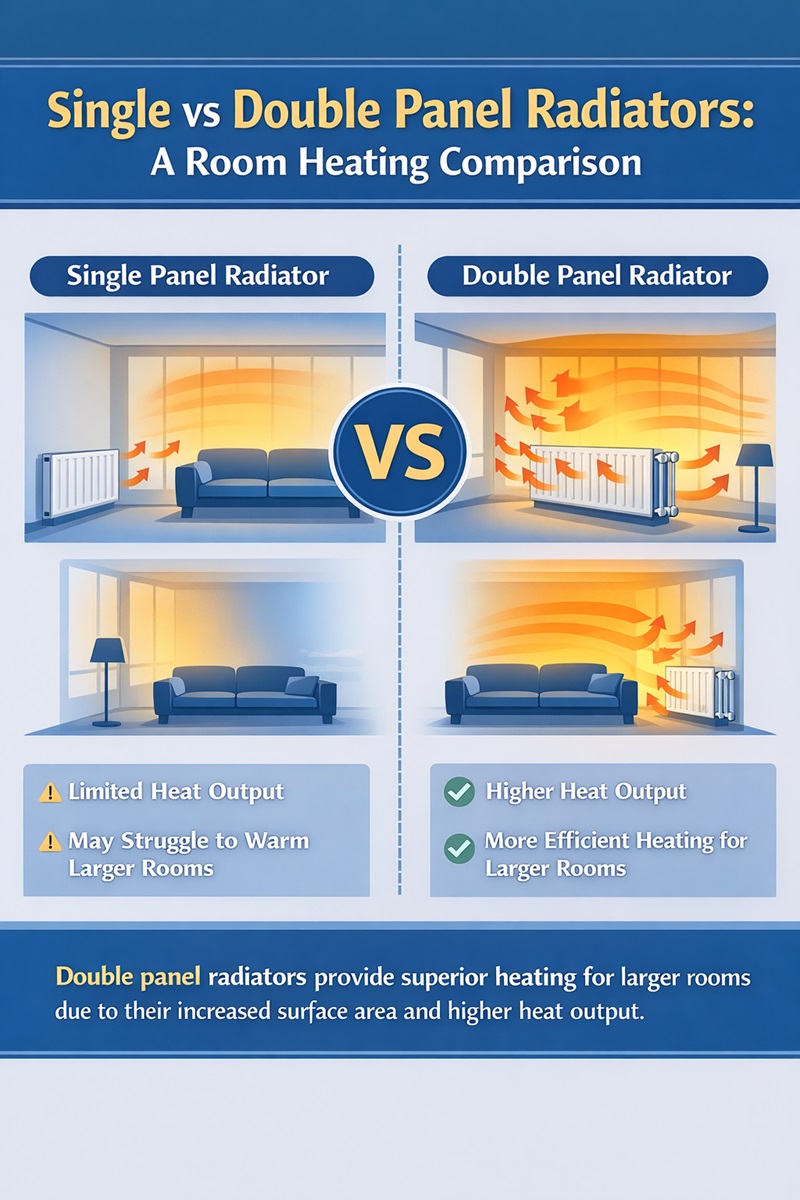
In practice, that extra output helps a large room in two ways. It brings the room up to temperature faster, and it makes it easier to hold that temperature without leaving colder zones at the edges. You notice that most in long living rooms, open-plan family spaces, and rooms with large window sections.
Why sizing matters more than the sales pitch
This is the part many radiator articles get wrong. More output is not automatically better. The right radiator is the one that matches the room’s heat loss and the heating system behind it.
If the radiator is too small, the room stays cool or takes too long to warm up. If it is too large for the setup and the controls are poor, comfort can become uneven and the system can run badly. The aim is not maximum heat for its own sake. The aim is enough heat, in the right place, at the right water temperature.
That is why installers calculate room heat loss instead of working from room size alone. They look at floor area, ceiling height, insulation level, glazing, external walls, and the target room temperature. The UK government’s Future Homes work also reflects this wider shift toward low-temperature heating and better fabric standards, with consultation material referring to low-temperature radiator characteristics and room-by-room heat loss design rather than crude one-size-fits-all emitter choices.
Why double panel radiators matter more with low-temperature heating
This is where double panel radiators have become more relevant again.
Radiators are no longer chosen only for gas boiler systems running hotter water. More homes are now being upgraded with heat pumps, or at least prepared for lower flow temperatures later. Once the water temperature drops, radiator surface area becomes far more important.
A smaller radiator can still heat a room, but only if the system runs hot enough to make up for its limited surface. A double panel unit gives more surface without always needing a much longer radiator across the wall. That makes it useful in rooms where wall space is limited but the heat demand is high.
This ties directly into current UK policy. Ofgem says the Boiler Upgrade Scheme supports heat pump and, in some cases, biomass boiler installation in homes and small non-domestic buildings in England and Wales, with grants of £7,500 for air source and ground source heat pumps. As more homeowners look at heat pumps, radiator suitability becomes part of the same conversation, not a separate issue left until the end.
The radiator alone does not decide the result
Even a well-chosen double panel radiator will disappoint if the rest of the system is not set up properly.
Controls matter. Balancing matters. Placement matters.
Energy Saving Trust says a proper central heating setup should include a programmer or timer, a room thermostat, and thermostatic radiator valves. It also warns that radiator covers can interfere with TRV readings, which is one more reason blocked or badly placed radiators often underperform.
Placement still gets overlooked. A radiator tucked behind bulky furniture or heavy covers will not warm the room as intended. In a larger room, that often shows up as uneven comfort rather than obvious system failure. The radiator has the output on paper, but the room never feels right.
When a double panel radiator makes sense
A double panel radiator is often a sensible choice when the room is large, open-plan, exposed to more outside walls, or full of glazing. It also makes sense when wall space is limited and you need more output from a shorter footprint.
It is also worth considering when a home is moving toward lower-temperature heating. In those cases, a higher-output radiator is often part of making the system work well without forcing water temperatures back up.
When it is not the full answer
A better radiator does not fix a room that leaks heat everywhere.
If insulation is poor, drafts are unchecked, seals around windows have failed, or the heating system is badly balanced, swapping in a double panel radiator will not solve the deeper issue. The same goes for poor controls or pipework problems.
The best results come from looking at the room properly, heat loss, controls, emitter size, and building fabric together. That is less exciting than a quick product claim, but it is how comfortable rooms are actually made.
Final thoughts
Double panel radiators improve heat output in larger rooms because they give the system more working surface to release heat where it is needed. That extra output matters most in rooms with higher heat loss and in homes using lower flow temperatures.
Their value is not that they are simply larger. Their value is that they often fit the heat demand of a bigger room better than a single panel unit, especially when the radiator is sized from actual heat loss and matched to the rest of the system.
That is the real point. In a larger room, comfort depends on replacing lost heat steadily and cleanly. A well-sized double panel radiator does that far better than a smaller radiator chosen on assumption alone.