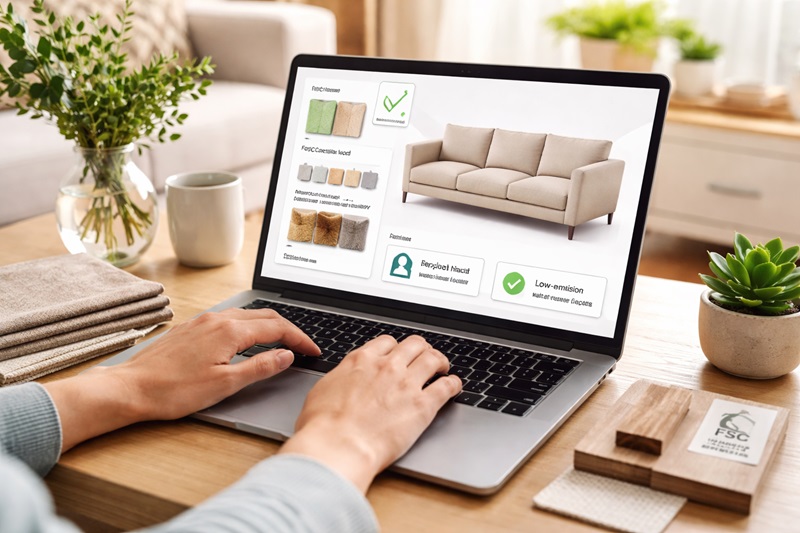

Furniture shopping has changed dramatically. Buyers still care about price, comfort & style, but more & more people are asking tougher questions before they click “buy”. What kind of wood is this exactly? Is the fabric free from anything nasty? Does it have a low-VOC finish? Is this piece going to last a while or be on the scrap heap in a couple of years?
Those questions are important because furniture is a pretty complex product. A single chair or sofa might involve timber, foam, textiles, adhesives, coatings & metal hardware. Some of those components have a big impact on forests, indoor air quality, repairability & waste. It’s not to say every purchase needs to be a deep-dive life-cycle analysis. But it does mean shoppers need more than just a colour swatch & a box with dimensions.
That’s where configurator tools can help out. When they’re done well, they do more than just let you swap oak for walnut or beige for charcoal. They turn product customisation into a clearer decision-making process by showing what materials are used, what claims are actually true, & how one option compares to another. And that kind of transparency is only going to get more important – in 2026, regulators & buyers alike are pushing for stronger product-level sustainability information. The EU’s Ecodesign for Sustainable Products Regulation is a great example of this. It introduces a Digital Product Passport framework designed to store all the info you need to support sustainability, circularity & compliance.
Why Sustainability Suddenly Matters More Than Ever for Furniture Buyers
Lots of shoppers have moved on from thinking “eco-friendly” is just some extra branding & moved on. They want furniture that looks good, works well & doesn’t come with any unnecessary tradeoffs for the planet or their health. In practice, that means paying closer attention to three main things: where materials come from, what the product emits indoors, & how long it’s likely to stay useful.
Wood sourcing is a major concern. The Forest Stewardship Council says FSC certification can link your furniture to responsibly managed forests & more transparent wood supply chains. That matters ’cause timber claims can be really hard to verify without some established certification system in place.
Indoor air quality is another one. A lot of buyers don’t realise that things like particleboard, MDF & hardwood plywood can be a source of formaldehyde emissions. In the States, these products are regulated under the EPA formaldehyde emission standards for composite wood products, which is all part of the TSCA Title VI system.
And then there’s durability. A cheap piece that fails early is not exactly a sustainable win. The greener choice is often the product that stays serviceable longer, can be repaired & doesn’t need to be replaced in a hurry. That’s why the sustainability conversation has shifted away from single buzzwords and towards broader product transparency.
Why traditional furniture shopping is always hiding the details that really matter
The old showroom model still does the trick for getting a feel for the comfort and what it looks like, but when it comes to actually being able to tell if its got any decent eco credentials, it usually falls short. A product tag might tell you the dimensions, the fabric colour, and the type of wood, but not what kind of standards that wood meets, or if the fabric has been tested for any nasty chemicals or if the finish even meets a basic low pollution benchmark.
Online shopping has a similar issue. Loads of product pages are all about selling the look first and then sort of vaguely explaining the rest afterwards. That makes it really hard for a shopper to compare a bog-standard bed with one that uses wood from a certifying body, has some low pollution materials, or uses materials that are a bit more transparent about where they came from.
This is the real stumbling block for buying sustainable furniture. Customers are keen to consider more eco-friendly options, but loads of brands just hide this useful info in ancient PDFs, generic marketing fluff or customer emails. A good configurator can really help by bringing all that stuff into the same place where you make the buying decision.
What a good furniture configurator actually needs to do
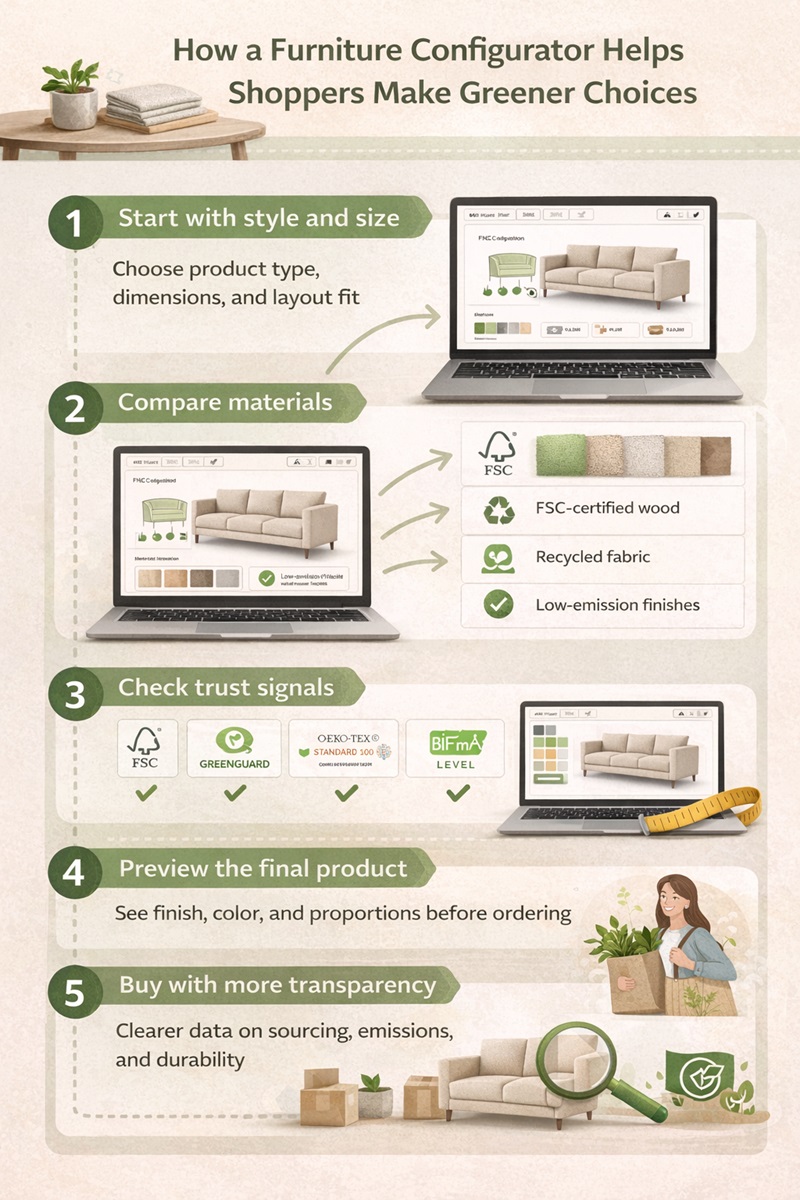
Good furniture configurator software does more than simply add options. It helps shoppers understand what they are actually choosing by combining visual customization with useful product data.
At the very least, it should let you see what actual product you’d be getting from the choices you’ve made. But for people who want to buy stuff that’s not going to hurt the planet, that’s just the start. The good ones also give you some actual data to go along with those choices.
For wood, that might be whether it’s been certified by the Forest Stewardship Council or if it’s got some other way of being able to track where the timber came from. For textiles, it might tell you if the fabric has this little Oeko-Tex label that means it’s been tested for nasty chemicals and made in a factory that’s doing its thing for the environment. Oeko-Tex says their MADE IN GREEN label lets you know that the fabric and leather items have been tested and made in a way that’s a bit better for people and the planet, and you can even track its journey.
For emissions, the configurator should give you an idea whether the finished product meets some basic low-pollution standard like the one from UL (Underwriters Laboratories). UL says that their GREENGUARD certification shows that the product hasn’t got any nasty chemicals leaking out of it and will help keep the air inside your home a bit cleaner.
Having that kind of info on hand really changes the shopping experience. Instead of just trusting some vague claim like ‘its natural’, ‘its clean’ or ‘its green’, you get to compare some options that actually have some third party backing to them.
The certifications that really matter when shopping for eco-friendly furniture
One of the biggest problems with all that sustainability content is it usually says ‘look for eco-friendly materials’ without actually telling you what that really means in the real world. A lot more useful is to look for specific, recognized certifications that actually mean something – and ones that are tied to the bit of the product you care about most.
When it comes to wooden furniture the FSC is one of the most obvious good signs because it shows that some thought’s gone into how the trees were chopped down and who actually owned them.
When you’re looking at indoor air quality and what your new furniture might be pumping into the air, then UL GREENGUARD is something to bear in mind – it specifically looks at all the chemicals inside the products that you put in your home.
For sofas and other bits of furniture with a lot of fabric on, OEKO-TEX labels are a good way to find out if the company has actually tested the fabrics for anything dodgy and, in some cases, whether their whole supply chain is up to scratch on an environmental and social level.
For office chairs and similar big-ticket items, the ANSI/BIFMA e3 LEVEL is super-useful. It looks at all sorts of things – from how the product was made to its environmental impact and how it might affect people’s health.
A product won’t suddenly become perfect just because it’s got one of these labels – but at least now you’ve got something meaningful to talk about.
Why low-emission stuff should be right in the configurator
Most people start by picking the bits of their new furniture that they can see – but that’s not where the story ends. What your product is made of can make a huge difference in terms of what it’s going to put into the air in your home.
That’s why low-emission stuff and info on formaldehyde should not be hidden away in some obscure page about compliance. If you’re choosing between two dressers that are almost identical – one of them has low-emissions composite wood that they’ve got all the paperwork for, the other just has no transparency at all – then that difference should be clear to see when you’re customising your purchase.
Over in the States, the EPA has got some fairly clear rules about formaldehyde limits in hardwood and MDF etc for when a product comes to market. It’s a good starting point for any brand – but there’s a world of difference between being compliant and being transparent. A good configurator should help bridge that gap by making the technical stuff into something that real people can actually use when making their decision.
A Better Configurator Tackles Mistakes Before They Happen
Sustainability goes far beyond just raw materials – its about what happens after the order has been placed. The truth is that furniture returns are a costly, messy and often frustrating experience – especially when you’re dealing with bulky or custom items. And its not just the disappointment, it also means extra packaging, transport and handling before the item ends up either discounted, refurbished or ultimately, trashed.
A return is the result of buyer and product mismatch. The wrong size, the wrong leg finish, or a fabric that looks totally different on screen can lead to a host of issues. A good configurator can help solve that mismatch by providing more accurate dimensions, better room visualization, clear finish previews and the chance to compare options side by side.
That is one of the most credible arguments in favour of configurators – it’s not about eliminating returns completely, but about cutting down avoidable errors in categories where these errors really do add up.
How Brands Avoid Greenwashing with Configurators
This is where many furniture brands get the green strategy all wrong. They treat sustainability as just a vague phrase rather than taking a more structured approach that involves verifiable product facts.
A key reminder for brands is that the FTC’s Green Guides are there to stop marketers misleading consumers with environmental claims. That is particularly important for furniture brands because terms like “eco-friendly”, “planet-safe” or “conscious” can be seriously off-putting if they’re not backed up by proper evidence.
Configurators can be a better way to communicate. Rather than using vague sustainability language, you can tie specific proof to each option:
- FSC-certified wood
- GREENGUARD-certified finished product
- OEKO-TEX-certified textile
- recycled-content percentage
- water-based finish
- replacement covers or modular parts
- warranty and repair details
That feels way more honest because at least you’re telling the buyer exactly what they’re getting and what’s been certified.
What the Best Sustainability-Focused Configurators Will Soon Show
This topic is getting more relevant fast because product transparency regulations are starting to move, especially in Europe. Under the EU’s Ecodesign for Sustainable Products Regulation, Digital Product Passports are designed to store information that supports sustainability, circularity and compliance. Its a direction that will only point toward richer digital records – not thinner ones.
For furniture brands, that means the future of customization is likely to be more than just about visual personalisation. They’ll increasingly need to include structured data on sourcing, emissions, repairability, recycled content, and how to handle the product at the end of its life.
In other words, the strongest configurators will ask more than just, “What colour do you want?” They’ll ask, “What is this thing actually made of? There any proof to back that up? And what happens to it over time?”
What to Check Before Buying Eco-Friendly Furniture Online
When shopping more sustainably with a configurator – you know, one of those tools that lets you pick & choose your furniture pieces – the most useful questions are pretty basic.
So, take a look at whether the wood used is certified, or if they’re just using vague language. Same thing with the upholstery or textiles, do they have some kind of recognized label for potentially hazardous chemicals? Check too whether the brand is transparent about the emissions, especially for products made from composite wood or have a lot of fabric in them. And what about repair parts, or removable covers – are they available? If not, it might be a sign the product isn’t built to last. What Do The Warranty Terms Say?
And basically it all comes down to whether the brand puts the sustainability info right next to the material choices in the configurator. If they say “sustainability matters” but don’t put any real info in the product description, that’s a pretty weak effort.
The Bottom Line
The truth is, buying eco-friendly furniture gets a a heck of a lot easier when the product info is more detailed.
This is really what a configurator is all about – letting shoppers cut through the vague claims and get a real look at the stuff that actually matters. Like whether the wood is certified, the textiles have been tested, the materials are made with lower emissions, the size is accurate, and design choices won’t cost you down the line.
For furniture brands, this isn’t just a nice-to-have feature – it’s a trust-builder. As the standards for transparent product info and sustainability reporting keep getting tougher, brands that are upfront with the facts will have a big advantage over those that are still just spewing green-sounding buzzwords.
A configurator won’t solve every sustainability question, but when it’s paired with some basic information about the materials and products, it makes making good choices a whole lot easier.
Note: some paragraphs have been re-written for a more conversational tone, some minor editing has been done on sentence structure and word choice to flow better.