
To reduce period waste, individuals can swap disposable items for reusable options, choose ethical brands, and advocate for sustainable practices.
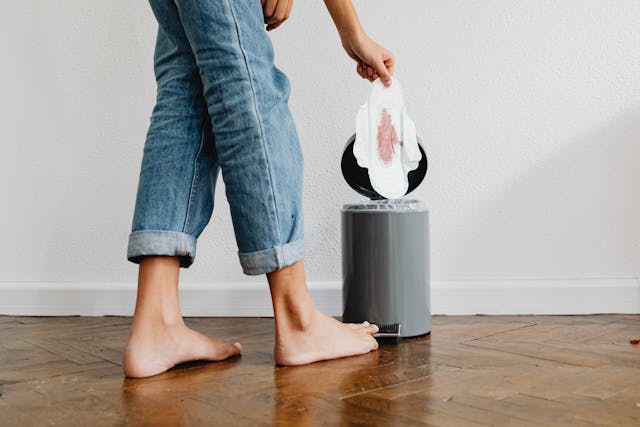
In the United States alone, approximately 12 billion pads and 7 billion tampons are discarded each year. These disposable pads may take 500 to 800 years to break down, creating an immense environmental footprint that outlives us by centuries.
Making these three low-effort adjustments dramatically shrinks your lifetime menstrual trash output without requiring expensive starter kits.
1. Swap Once & You’re Done
The most exhausting part of disposable period products is the cycle of repurchasing them. Every month, you notice supplies running low, add them to the grocery list, bring them home, use them, toss them, and repeat the process.
Multiplying that routine by 12 cycles a year over 30 to 40 years of menstruating life results in an enormous expenditure of time and plastic. In fact, a person can expect to use approximately 10,000 menstrual products in their lifetime.
Switching to a reusable period product breaks that loop entirely. You buy once, learn once, and then largely stop thinking about it. The reusable landscape has expanded significantly in recent years, offering several reliable alternatives.
- Menstrual cups are bell-shaped silicone cups inserted into the vaginal canal, lasting up to 10 years with proper care.
- Period underwear looks and feels like regular underwear but contains built-in absorbent layers that replace pads or panty liners.
- Reusable cloth pads are washable fabric alternatives that snap around underwear and are laundered between uses.
- Menstrual discs sit differently than cups, positioned back behind the cervix at the vaginal fornix for a comfortable fit.
For anyone who feels overwhelmed by sizing charts or complicated folding techniques, menstrual discs deserve a closer look. Innovative designs like ultra-soft reusable menstrual discs are engineered to eliminate the friction that typically prevents people from making the switch.
Featuring a universal shape that works across different bodies, this style removes the need for confusing sizing systems. Sitting securely behind the cervix, it provides up to 12 hours of leak-free protection to navigate daily errands without interruption.
If a first-time insertion feels daunting, applying a small amount of water-based lubricant on the rim can make the process much smoother. It is critical to avoid oil-based or silicone-based lubricants entirely. These formulas will degrade and permanently damage the silicone material over time.
One purchase and one short learning curve can lead to a decade of not having to buy or throw away a single disposable product. Switching to a single reusable alternative offsets thousands of disposable products over its lifetime. That is a genuinely significant reduction achieved by doing less.
| Important: Never use oil-based or silicone-based lubricants with your menstrual cup or disc. These formulas will permanently degrade the silicone. Always stick to water-based lubricants for safe insertion. |
2. Let Ethical Brands Do the Research for You
Here is a sustainable living secret that is rarely discussed. You do not have to become an expert or decode complex ingredient lists. You just need to identify brands that have already done that foundational work.
The sustainability space can often feel like a maze of greenwashed claims and ambiguous labels. When evaluating a period care company, look for specific indicators of a trustworthy brand.
Doing this upfront research guarantees your money supports environmentally responsible practices.
- Body-safe and toxin-free materials ensure the absence of BPA, synthetic fragrances, chlorine bleach, and phthalates.
- Third-party regulatory approvals from organizations like the FDA indicate a product has been rigorously reviewed against safety standards.
- Vegan and cruelty-free practices frequently correlate with cleaner, more responsible ingredient sourcing.
- Transparent packaging and sourcing show higher accountability regarding where and how products are manufactured.
- A clear mission beyond the product proves companies are actively invested in destigmatizing menstrual health and reducing environmental impact.
Brands have built comprehensive product lines around cleaner materials, transparent sourcing, and body-safe formulations.
Prioritizing medical-grade materials and broader health education demonstrates a commitment to sustainable intimate care. Finding these dedicated companies makes future shopping completely stress-free.
The strategy is not about strict brand loyalty for its own sake. It is about building a shortlist of trusted companies. When a product eventually needs replacing, you can reach for a reliable repeat order rather than starting your research from scratch.
| Key Insight: You don’t need to become a sustainability expert to make eco-friendly choices. Simply identifying a shortlist of transparent, ethical brands allows you to effortlessly outsource the heavy research. |
3. Say Something, Even One Small Thing
Advocacy sounds like an intimidating word, often conjuring images of organized campaigns and public statements. However, when it comes to reducing period waste on a cultural level, advocacy can be as small as a single conversation.
Cultural silence around menstruation has historically been one of the biggest barriers to the widespread adoption of reusable period products.
People cannot switch to alternatives they do not know exist. Sharing your experience helps normalize these conversations among your peers. Here is what low-effort advocacy actually looks like in practice.
- A brief social media update about trying a reusable disc normalizes the experience without requiring a lengthy essay.
- Requesting sustainable period options at a local pharmacy signals consumer demand and eventually changes shelf inventory.
- Telling a friend or coworker that switching to a reusable product was easy invites questions they might be too embarrassed to search online.
This step also heavily involves your current disposal habits. Not everyone is ready to make the full switch to reusables immediately, and that is completely fine. If you are still using disposables, the most impactful change you can make is to stop flushing them.
Flushed pads, tampons, and applicators are significant contributors to microplastic ocean pollution. Wrap and bin them instead. Exploring biodegradable options made from organic cotton generates less permanent waste while you work toward a longer-term swap.
| Pro Tip: If you aren’t ready to switch to reusables yet, your biggest immediate impact is to stop flushing tampons. Always bin disposables to prevent severe microplastic ocean pollution. |
Your Next Steps
Three practical steps form the entire framework for reducing waste. You can rely on one reusable product swap, one trusted brand shortlist, and one small act of honesty about the waste generated by traditional period care.
None of this requires absolute perfection, nor does it demand that you have every detail figured out before beginning your sustainable journey.
Pick one step to try this cycle to see how it fits into your routine. If you are starting with a product swap, look into streamlined options that are designed for a lower-maintenance experience. This will result in a tangible reduction in household trash over time.
If you are focusing on brands, build your vetted shortlist today and let it guide your future purchases. When you make the shift, share it openly to normalize the conversation around menstrual health and environmental responsibility.
Every cycle is another opportunity to approach personal care a little differently, benefiting both your routine and the planet.
| Quote: The most impactful sustainability journey begins not with a flawless lifestyle overhaul, but with a single, imperfect step toward better habits today. |