
Australian cities are littered with hard surfaces – the hundreds of kilometres of rooftops, roads, car parks and sidewalks that stop rainwater from seeping into the earth. When heavy rain falls on these impermeable surfaces, all that water rushes off into the drains – an overwhelming load for any system.
In response, Australia has turned to a different way of thinking about urban stormwater – Low Impact Development (LID), or as we call it Water Sensitive Urban Design (WSUD). This new approach is designed to slow down, clean and soak up stormwater close to where it falls – just like it does in the wild.
You can see this at work in Australian cities – rain gardens, bio-filtration ponds, permeable roads and waterlogged wetlands are all popping up. Yet if you think the key to making these things work lies in how they look, think again.
The real key to success – or failure – is in the dirt beneath our feet.
In Sydney, Melbourne, Brisbane and Perth, the performance of LID systems is being determined by some pretty technical stuff – the way soil reacts, how groundwater behaves, and just how accurate the soil engineers are being.
Australia in a Storm: What’s Driving the Need for WSUD
Australia is one of the most urbanised countries in the world – we’re talking over 85% of Aussies living in cities. In heavily built-up areas, up to 70% of all rain can end up as surface runoff – a far cry from the 10% of natural landscapes.
And that runoff is one of our biggest sources of pollution – it’s carrying who-knows-how-much sediment, nitrogen, phosphorus, heavy metals, hydrocarbons and litter into our waterways.
The Bureau of Meteorology has also been tracking some pretty wild short-burst downpours in parts of eastern and northern Australia. And these patterns just aren’t helping our old-fashioned drainage systems, which were built with yesterday’s rainfall assumptions in mind.
In fact, the Cooperative Research Centre for Water Sensitive Cities has shown that just throwing more pipes and drains at the problem isn’t going to cut it for the future.
So WSUD is no longer just a greenie preference – it’s a survival strategy.
What does LID really mean in Australia? The WSUD framework in a nutshell
In Australia, the principles of Low Impact Development have been baked into our state and local planning documents under the banner of Water Sensitive Urban Design.
Some of the key rules include:
- In Western Australia: the Stormwater Management Manual from the Department of Water and Environmental Regulation
- In Victoria: the Best Practice Environmental Management guidelines
- In Queensland: the State Planning Policy water quality objectives
- In NSW: the MUSIC modelling rules for cutting down pollutants
So, for any new development, the rules are pretty clear – they’re expected to cut back on things like Total Suspended Solids, Total Nitrogen and Total Phosphorus by massive amounts – 80% in some cases.
Meeting those targets isn’t just about running some numbers, though – it’s all about understanding what’s going on beneath your feet, and getting the hydrological modelling right.
Why Soil is the Real Game Changer
Soil properties play a crucial role in deciding how water behaves on a site – whether it sinks in, forms puddles or causes costly damage to buildings.
Key factors to consider are:
- Just how quickly does water seep into the ground?
- How easy or hard is it for water to flow through the soil?
- What’s the state of soil compaction?
- How prone is it to clay swelling and shrinking?
- How deep is the groundwater level at different times of the year?
- Can the soil hold up to heavy loads?
Build a rain garden without getting a proper handle on infiltration rates and it will likely fail within a few months. Get the soil permeability wrong and you’ll end up with surface water ponding or structures that just can’t cope. And what about groundwater levels – underestimate them by a long shot and you’ll send your plants into a long decline.
For example, sites with reactive clays or high seasonal groundwater levels may require underdrains, amended soils, or alternative stormwater strategies rather than direct infiltration.
Whether you are designing a new development or upgrading urban drainage, working with a geotechnical engineer perth specialists can provide is a critical step toward long-term performance and safety.
The upshot is that you can’t just slap a fancy surface solution and expect it to compensate for a bunch of underlying issues.
Regional Variations: Soils in Australia and LID Suitability
Perth, Western Australia
Perth is built on a lot of sandy soils from the Bassendean and Spearwood dunes. These soils tend to soak up water pretty quickly, which makes infiltration-based systems a good idea.
But don’t think it’s all sunshine and rainbows:
- In some areas of the Swan Coastal Plain, the groundwater is really close to the surface.
- Nutrients also have a bad habit of leaching into the water table and causing problems.
- When the rain comes down, the water table can fluctuate quite a bit – which means you need to design your infiltration basins and underdrains with care.
Melbourne, Victoria
Clay-rich soils are pretty common in Melbourne – and they can be a real problem. Low permeability, and shrink and swell – not a great combination. Pure infiltration systems often just won’t cut the mustard unless you do some soil work.
Biofiltration systems often do the trick, especially when you throw in some engineered filter media.
Brisbane, Queensland
Rain can come down in bucketloads in Brisbane – and its mixed soil types just add to the chaos. Erosion and peak flow are a serious threat. And if you’ve got a sloping site, subsurface stability is a major design priority.
Sydney, New South Wales
The geology in Sydney is all over the place – from sandstone-derived soils to clay basins. Don’t even think about using generic design principles, you need to do some serious site-specific geotech work.
Subsurface Engineering in Action
To do WSUD right, you need to get a good handle on the geotech from the get-go. That typically involves:
- Drilling boreholes and getting some samples
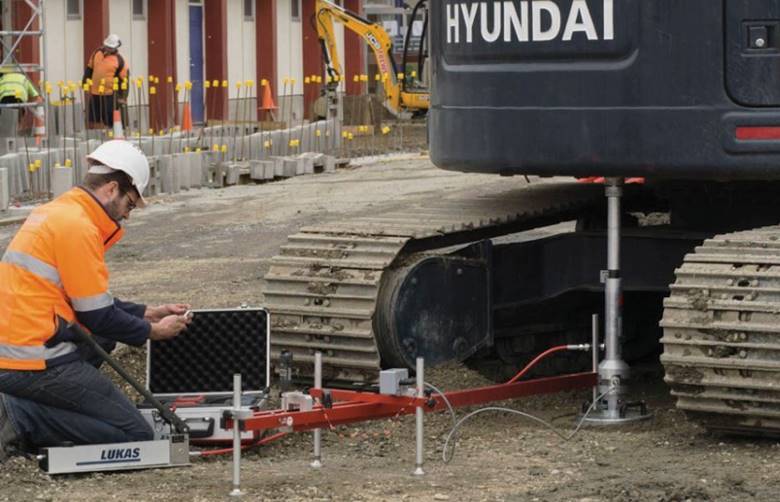
- Testing permeability on the job
- Setting up groundwater monitoring
- Doing some lab work to classify the soil
- Testing the compactness of the soil
And once you’ve got all that info, you can start thinking about engineering responses like:
- Designing engineered filter media to get through the hardest soils
- Installing underdrains when things get a bit too soggy
- Lining up biofiltration cells to handle all the water that can’t get through
- Adding in structural support beneath permeable pavements
- Setting up overflow systems to stop the site from drowning
When you get it right, you’ll be able to balance what you need to do to keep the environment happy with what’s required to make sure the site doesn’t end up a disaster zone.
Australian Case Studies: WSUD at Scale
WGV at White Gum Valley, Perth
White Gum Valley. A medium-density infill development built on top of Perth’s uniquely sandy soils. The design team here went to great lengths to tailor distributed infiltration systems to those soils, keeping an eye on the local groundwater levels and working to manage nutrient runoff.
Key outcomes included:
- Saving on potable water usage
- Improving the way stormwater flowed through the system and infiltrated into the ground
- Helped protect the downstream Swan River from the pollutants we put in the water
Lynbrook Estate, Melbourne
Back in the day Lynbrook Estate made waves as one of the first large-scale WSUD projects in the country – incorporating constructed wetlands and biofiltration systems.
Monitoring showed that biofiltration systems built properly could knock back nitrogen and phosphorus levels, reduce the rate that stormwater flowed through the system, and boost biodiversity in those wetland corridors
Sydney Olympic Park
When it got redeveloped, they really went for it and built in stormwater harvesting, constructed wetlands, and biofiltration systems as standard practice.
The end result was that they were able to cut back on the pollutants entering the Parramatta River, reuse stormwater for irrigation, and set about restoring the place to its former glory over the long term
These projects show that WSUD can definitely deliver results, if you take the time to really understand how the underlying soils and groundwater behave.
Measuring Success: Does WSUD Deliver?
Research done by the CRCWSC shows that when done properly, biofiltration systems can give you:
- 70-90 percent reduction in total suspended solids
- 45-75 percent reduction in total nitrogen
- 45-80 percent reduction in total phosphorus
On the down side though, we’ve seen the performance of those systems really take a hit when:
- The construction screws the soil
- People neglect maintenance
- You start making wrong assumptions about how much infiltration occurs
- You ignore groundwater constraints
So success is really a mix of design and good asset management.
The Economic Implications
Building in a distributed WSUD system can:
- Save on the cost of piping and large detention basins further down the line
- Make the system a lot less reliant on big pipe networks
- Make for a more pleasant urban environment and better property values
- Give you more resilience against extreme weather conditions
But there are some upfront costs you’ll need to pay, such as:
- Doing detailed geotechnical investigations and monitoring the groundwater
- Building in engineered soil profiles
However, when you factor in the savings you make by not having to build so much infrastructure, it’s not always a worst-case scenario.
Climate Change and the Future of Urban Drainage
As climate change starts to shift the way it rains and we add more people to our cities, relying just on conventional drainage starts to get a lot riskier
WSUD can give you more of an edge, if you take the time to understand the underlying geotechnical conditions
In Australia – with all our different soil types and groundwater conditions – there’s no point in just slapping on some greenery and calling it a day. That’s not WSUD – that’s just a pretty landscape. What you really need is a solid engineering foundation below the surface.
Without that, all your pretty little rain gardens and swales are just for show.
The Foundation of Water Sensitive Cities
We talk a lot about green roofs and swales and permeable pavements, and they’re all great features – but at the end of the day, they only work because of the work that goes on beneath them.
Perth’s got sandy soils, Melbourne’s got clays, Brisbane’s had to deal with all sorts of slope issues and Sydney’s got a wild mix of geologies. But no matter where you are, the one thing you can count on is that stormwater solutions work best when you start with a solid understanding of the underlying soils and geotechnical conditions.
If you get that right – if you build on a good foundation – then you can indeed make progress towards building a water sensitive city. And that’s got to be the goal.