
Farming has always worked in partnership with nature. Today, that relationship is under pressure.
Rising input costs, climate volatility, and tighter environmental rules are forcing farms to rethink how they operate. Across Australia and beyond, sustainability is no longer treated as a side project. It has become a practical response to economic risk, resource scarcity, and long-term productivity.
Going green is not just about cutting emissions. On modern farms, it is increasingly about saving money, protecting soil and water, and improving daily efficiency. From buildings and machinery to energy systems and water use, sustainability now touches every part of the property.
What follows is a closer look at how farms are making that transition—and why these changes are accelerating.
Greener Farm Buildings Are Doing More With Less
Farm sheds and utility buildings were once designed for speed and cost, not efficiency. Bare metal walls, poor airflow, and minimal insulation were common. That approach is changing.
Modern farm buildings are now designed to work with the environment. Better orientation, natural light, controlled ventilation, and insulation reduce the need for mechanical cooling and heating. Over time, these design choices can cut energy use significantly, especially in climates with large temperature swings.
Material selection also plays a role. Longer-lasting steel, recycled components, and corrosion-resistant finishes reduce maintenance and replacement cycles. Fewer repairs mean less material waste and lower lifetime costs.
Some farms work with rural shed specialists such as Ranbuild to design farm shed that support solar installations, rainwater collection, and efficient storage layouts. When sheds double as energy and water assets, they move beyond storage and become part of the farm’s sustainability system.
Cleaner Farm Machinery Is Reducing Fuel and Noise
Diesel has powered agriculture for generations, but its dominance is starting to weaken.
Electric and hydrogen-assisted machinery is slowly entering real-world farm use. While these technologies are still evolving, early adopters are already seeing benefits. Electric machines eliminate exhaust fumes at the point of use and operate far more quietly. This improves working conditions for people and reduces stress for livestock, particularly on farms close to residential areas.
Efficiency gains matter just as much as cleaner fuel. Modern machinery increasingly includes digital monitoring systems that track fuel use, service intervals, and performance in real time. Farmers can identify inefficiencies early, avoid breakdowns, and reduce wasted energy.
According to agricultural research groups such as CSIRO, data-driven equipment management is one of the fastest ways to lower emissions without sacrificing productivity.
Renewable Energy Is Becoming a Core Farm Asset
Energy costs are one of the most unpredictable expenses on a farm. To regain control, many producers are generating power on site.
Solar panels are now common on sheds, workshops, and unused land. In windy regions, small-scale turbines can complement solar output. Together, these systems reduce reliance on the grid and buffer farms from price spikes.
Battery storage adds another layer of resilience. Stored energy can keep pumps, refrigeration, and essential systems running during outages or peak demand periods—when electricity is most expensive.
Some farms are also turning animal waste into energy through biogas systems. This approach converts manure into usable fuel while reducing methane emissions and waste handling costs. It is a practical example of circular farming, where outputs become inputs instead of liabilities.
For many operations, the appeal of renewable energy is not environmental branding. It is long-term cost stability and operational independence.
Smarter Water Use Is Protecting Yields in Drier Years
Water remains one of agriculture’s most valuable and vulnerable resources.
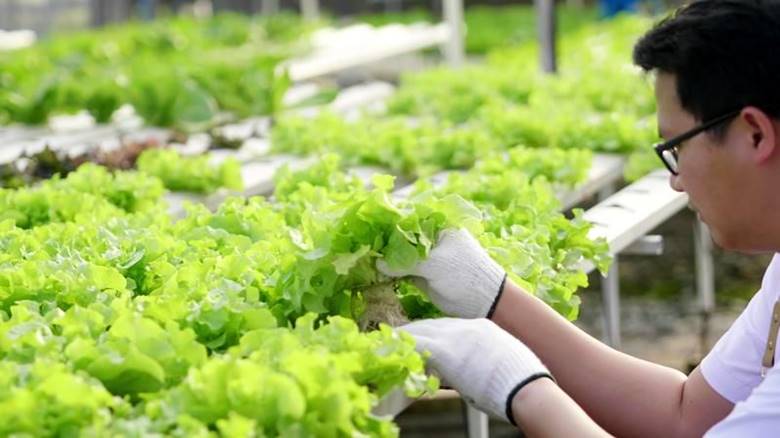
Traditional irrigation systems often apply water evenly, whether crops need it or not. Modern approaches focus on precision. Soil-moisture sensors allow farmers to irrigate only when conditions demand it. Drip systems deliver water directly to root zones, reducing evaporation and runoff.
These methods do more than save water. They also reduce pumping energy and improve crop consistency. In drought-prone regions, farms using precision irrigation are better positioned to maintain yields when supplies tighten.
Rainwater harvesting has also become standard practice on many properties. Capturing runoff during wet periods provides a buffer during dry seasons and reduces dependence on external water sources.
In parallel, practices such as cover cropping help soils retain moisture and resist erosion. Healthier soil holds water longer, reducing irrigation demand over time.
Waste Reduction and Targeted Chemical Use Are Improving Soil Health
Sustainability on modern farms often begins with waste.
Organic material that once went unused—manure, crop residue, food scraps—is increasingly composted and returned to the land. This reduces the need for synthetic fertilisers while improving soil structure and nutrient balance.
Chemical inputs are also becoming more precise. Rather than blanket spraying, farmers now use drones, sensors, and GPS-guided equipment to treat only affected areas. This lowers chemical use, protects waterways, and reduces costs without compromising crop performance.
These changes are not driven by regulation alone. They are driven by results. Healthier soils respond better to stress, support stronger yields, and require fewer inputs over time.
CERES Community Environment Park
What it is
CERES is a large sustainability park and urban farm in Melbourne.
It has operated since the early 1980s and is one of Australia’s best real-world examples of sustainable food systems.
Why it works as a sustainability model
CERES uses practical systems that work together every day:
- Grows food using permaculture and organic methods
- Turns food waste into compost and returns it to the soil
- Collects and reuses rainwater across gardens
- Uses renewable energy where possible
- Combines food growing, education, and public access
Real impact
- Supplies produce to local markets and on-site cafés
- Restored soil on land that was once contaminated
- Used as a case study by councils, universities, and planners
Why it matters
CERES shows that sustainable gardens can work at scale.
They can be productive, reliable, and economically viable inside cities.
Brooklyn Grange Rooftop Farm
What it is
Brooklyn Grange runs the world’s largest rooftop soil farms on buildings in New York City.
Why it succeeds
The farm delivers clear environmental and business results:
- Grows food on rooftops using lightweight soil
- Absorbs millions of litres of stormwater each year
- Lowers urban heat through green roof cooling
- Produces tens of thousands of kilos of vegetables annually
- Operates as a profitable business
Real impact
- Supplies produce to local restaurants and markets
- Shows food can be grown in dense urban areas
- Reduces roof runoff during heavy rain
Why it matters
Brooklyn Grange proves sustainable gardens can:
- Use non-traditional spaces
- Deliver real environmental benefits
- Stay financially viable
Cost vs Savings From Sustainable Systems
Many farms and gardens adopt sustainable systems for practical reasons.
Upfront costs vary, but long-term savings often outweigh them.
Typical Cost and Benefit Comparison
| Sustainability Upgrade | Upfront Cost | Long-Term Benefits |
| Solar panels | Medium–High | 30–60% lower power bills; payback in 4–7 years |
| Battery storage | Medium | Better energy security; fewer outages |
| Precision irrigation | Low–Medium | 20–40% less water use; better crops |
| Rainwater systems | Low–Medium | Less reliance on mains water; drought protection |
| Low-emission machinery | Medium–High | Lower fuel and repair costs; quieter use |
| Composting systems | Low | Reduced fertiliser costs; healthier soil |
What Sustainable Farming Really Delivers
Sustainable farming is often framed as an ethical choice.
In practice, it is a business advantage.
Farms that invest in:
- Efficient buildings
- Smarter machinery
- Renewable energy
- Precise water use
- Waste reduction
build systems that are more stable and predictable.
They are also less exposed to rising fuel, water, and energy costs.
The shift does not happen overnight. Some tools are still expensive.
But the direction is clear.
Modern farms show that caring for land and running a strong business can work together.
Today, sustainability is becoming part of how success is measured—season after season.