
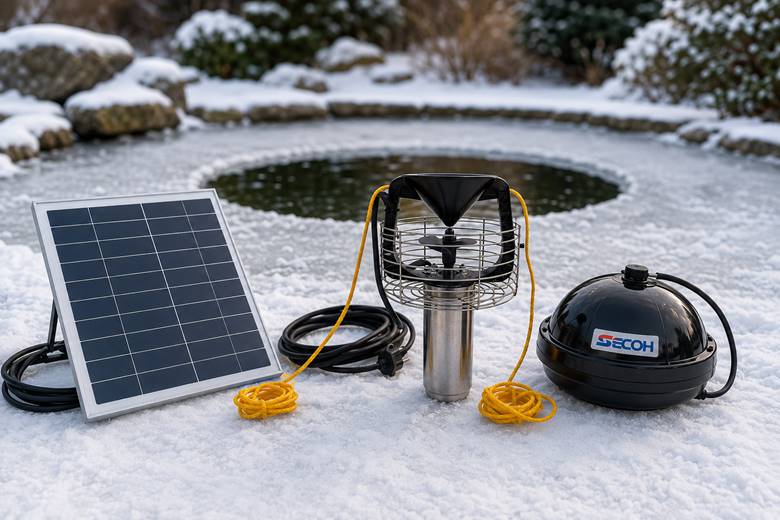

A winter pond needs more than an unfrozen surface. Beneath the ice, fish still use oxygen, organic matter still breaks down, and trapped gases need a way out. A solar-powered pond heater or solar-supported winter pond system can help protect aquatic life while reducing reliance on grid electricity.
The goal is not to warm the entire pond. In most backyard and koi ponds, winter equipment keeps a small opening in the ice so gas exchange can continue. For pond owners comparing seasonal equipment, Pond heaters are available in floating, outdoor, koi pond, and solar-supported options to help protect ponds during winter.
Why Winter Pond Care Matters
When a pond freezes over, conditions below the surface can change quickly. Ice blocks contact between water and air. Snow cover can reduce sunlight, which limits photosynthesis in aquatic plants and algae. As winter progresses, dissolved oxygen can drop, especially in shallow ponds, stocked ponds, or ponds with leaf buildup.
The University of Illinois Extension notes that fish can become stressed when dissolved oxygen falls to 5 parts per million, and winter fish kills are often tied to low oxygen. The U.S. Geological Survey explains that dissolved oxygen is a key measure of water health because aquatic life depends on it.
Winter pond care should focus on balance. A pond heater, de-icer, or aeration system should keep the pond breathing without using more energy than needed.
What a Solar-Powered Pond Heater Can Do
A solar-powered pond heater, or solar-supported pond de-icing setup, helps maintain a surface opening during freezing weather. Depending on the product, it may support ice control, water movement, aeration, or gas exchange near the surface.
Most outdoor pond heaters do not heat every gallon of water. They help prevent a full ice seal so oxygen can enter and gases from decomposing organic matter can escape. This matters for koi ponds, backyard ponds, and ornamental water gardens that hold fish through winter.
Solar support uses sunlight as an energy source. The U.S. Department of Energy explains that solar technologies capture sunlight and convert it into useful energy. In pond care, that can mean powering small equipment, supplementing a system, or reducing grid use when conditions allow.
The Sustainability Advantage of Solar Pond Equipment
Solar energy is not right for every winter pond. Short days, cloudy weather, snow on panels, and freezing temperatures can reduce output. In cold climates, a solar-supported pond system may need backup power during long freezes. Still, solar equipment can help when it is sized correctly and matched to the pond.
The U.S. Energy Information Administration reports that solar energy systems do not produce air pollution or greenhouse gases while operating. It also notes that photovoltaic systems can offset the energy used to manufacture them within 1 to 4 years, while many systems may operate for 30 years or more.
The Reuters report that renewable power generated more electricity than coal globally in the first half of 2025 shows how quickly solar and other renewables are expanding. For homeowners, the takeaway is practical: solar can reduce operating impact when the equipment fits the site.
Cost also matters. Forbes Home reports that the average 6.5 kW residential solar installation costs $16,600 to $20,500. A solar pond heater or solar-supported pond device is much smaller than a whole-home system, but the decision still depends on sunlight, climate, pond size, equipment quality, and backup needs.
How to Choose a Solar-Supported Winter Pond Setup
The right winter setup depends on pond size, depth, fish load, and local weather. Start with the pond’s main winter risk.
First, consider size and depth. A small ornamental pond may only need a floating de-icer to maintain an opening in the ice. A larger pond, or one with more fish, may need stronger equipment or support from a pond aerator. Shallow ponds are more vulnerable to temperature swings and oxygen loss.
Next, identify the job the equipment must do. If the surface freezes completely, a heater or de-icer can keep a breathing hole open. If oxygen movement is the issue, an aeration system may be a better primary tool. Some koi ponds and heavily stocked ponds benefit from both.
Then, check the sunlight. Solar equipment works best where panels receive direct sun. If the pond sits under trees, near a shaded fence, or in a cloudy winter region, output may be limited. In those cases, a hybrid setup may be safer.
Finally, choose outdoor-rated equipment. Aquarium heaters are not built for outdoor debris, freezing weather, or seasonal exposure. Pond-rated heaters, de-icers, and solar-supported systems are built for winter pond use.
Pairing a Heater with Better Year-Round Water Care
A solar-powered pond heater works best when the pond is maintained before winter. Many cold-weather problems begin in fall, when leaves, sludge, and dead plant material settle at the bottom. As that material breaks down, it can use oxygen and release gases under the ice.
Before freezing weather, remove excess leaves and trim dying aquatic plants. If the pond has cloudy water or recurring debris, a pond filter can help keep the water clearer during the active season and reduce buildup before winter.
Moving water also supports pond health. In warmer months, solar pond fountains can add circulation without relying only on grid electricity. For outdoor spaces used at night, pond fountains with lights can add movement and visibility while keeping water active.
A winter heater works best as part of a full pond care plan, not as a last-minute fix.
Winter Maintenance Tips for a Healthier Pond
Once cold weather starts, inspect the pond without disturbing the fish. Keep solar panels clear of snow, leaves, and debris. Check that the heater, de-icer, or aeration system is keeping an opening at the surface.
Do not smash ice to create a hole. The shock can stress fish. A properly sized de-icer or aeration setup is safer.
If snow covers the pond for an extended period, clear part of the surface from the edge so light can reach the water. Do not walk on pond ice unless it has been professionally confirmed as safe.
Reduce feeding as temperatures drop. Many pond fish slow down in cold water and need less food. Uneaten food decays and increases oxygen demand under ice.
You may like: Step-by-Step Installation of Solar Pond Fountains for a Greener Backyard
A Smarter Way to Protect Fish Through Winter
A solar-powered pond heater can support winter pond care when expectations are realistic. It is best used to maintain gas exchange, reduce oxygen stress, and limit energy use. The right system depends on pond size, fish load, climate, and sunlight.
Some ponds can rely on solar support during mild winter conditions. Others need a traditional de-icer, aerator, or backup power source. The core goal stays the same: keep the pond breathing, reduce excess organic waste, and use equipment built for outdoor winter conditions.
With the right setup, pond owners can protect fish, preserve water quality, and manage winter care with less wasted energy.